THIS SECTION IS BROKEN UP INTO 2 CATEGORIES:
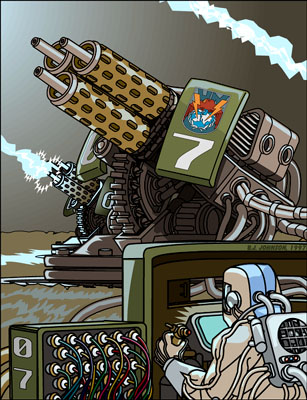
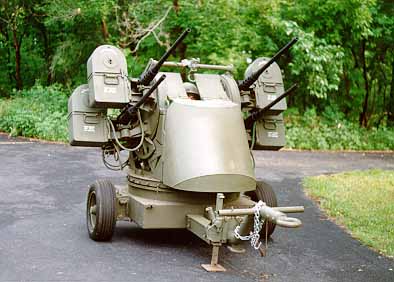 LIGHT ARTILLERY |
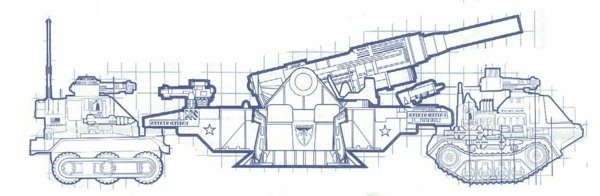 HEAVY ARTILLERY |
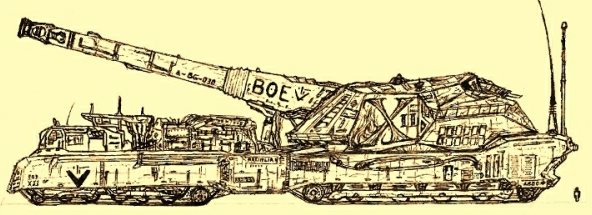
Mike Van
Atta's quick key to this section:
Damage:
basic damage done by standard projectile.
Blast area: explosion – affected area for standard projectile
Ammo supply: magazine capacity
Rate of fire: how many projectiles can the system fire per 3,2 second round.
Relability: same as in CP2020
Range: effective range in meters, see notes below.
Deploy time: how long it takes to turn the system from transport position to firing position.
Price: in eb.
Artillery – notes
Avalibility and concealability of the given weapons isn’t listed for obvious reasons – they are far too big to be hidden on any person, and avalible only to powerful organisations, like governments and the mightiest, most war-like corporations.
Note: rate of fire can vary dramatically from the MaxMetal values – that’s because I’m using real-life equivalents. Whoever wrote the MaxMetal section on automatic weapons, had little idea on how fast do these things shoot!
Note: range is given as in real gun systems – maximum effective range. For direct fire, it’s the longest range where you can actually hit something and harm it (equivalent of CP2020 “long” range). For indirect fire, it’s just how much distance you can push between the gun and the hit point (CP “extreme” distance)
Option: RAP – Rocket-assisted projectiles. This is artillery ammunition – shells launched from a normal cannon (usually a howitzer), but equipped with rocket motor to boost the range. RAP ammo has +25% range, takes 30% more space, and it costs +50% of the given basic price (say, you take a chemical – tear gas – RAP shell for a 150mm howitzer. A 150mm round costs 1000eb, chemical gas doubles it to 2000eb, and RAP motor is +50 of the basic price – 2500eb total. It takes 1,3 space and has a range of 21.250 meters).
Blast area: explosion – affected area for standard projectile
Ammo supply: magazine capacity
Rate of fire: how many projectiles can the system fire per 3,2 second round.
Relability: same as in CP2020
Range: effective range in meters, see notes below.
Deploy time: how long it takes to turn the system from transport position to firing position.
Price: in eb.
Artillery – notes
Avalibility and concealability of the given weapons isn’t listed for obvious reasons – they are far too big to be hidden on any person, and avalible only to powerful organisations, like governments and the mightiest, most war-like corporations.
Note: rate of fire can vary dramatically from the MaxMetal values – that’s because I’m using real-life equivalents. Whoever wrote the MaxMetal section on automatic weapons, had little idea on how fast do these things shoot!
Note: range is given as in real gun systems – maximum effective range. For direct fire, it’s the longest range where you can actually hit something and harm it (equivalent of CP2020 “long” range). For indirect fire, it’s just how much distance you can push between the gun and the hit point (CP “extreme” distance)
Option: RAP – Rocket-assisted projectiles. This is artillery ammunition – shells launched from a normal cannon (usually a howitzer), but equipped with rocket motor to boost the range. RAP ammo has +25% range, takes 30% more space, and it costs +50% of the given basic price (say, you take a chemical – tear gas – RAP shell for a 150mm howitzer. A 150mm round costs 1000eb, chemical gas doubles it to 2000eb, and RAP motor is +50 of the basic price – 2500eb total. It takes 1,3 space and has a range of 21.250 meters).
| BACK TO
MILITARY/CORPORATE CATALOGUE |
BACK TO DATAFORTRESS 2020 |
(Written by Mike Van Atta and Deric "D" Bernier, images from GI Joe and unknown sources.)