SMALL SPACECRAFT


Model:
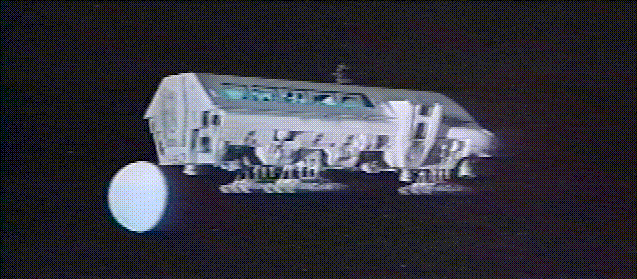
Mitsubishi-Koryidansu Kobune
Drive:
chemical
Type:
OTV
# burns:
10
Crew:
2
Power:
B, FC, S,
Passengers:
8
sensors:
50%
Cargo: 1x20 m3 (internal cargo hold), 3 flitters Computer Rating:
2 (10 MU)
SP:
1-3
Actions/Turn:
1
DP:
6
Overkill:
3

Cost: 60 million eb
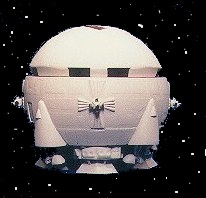
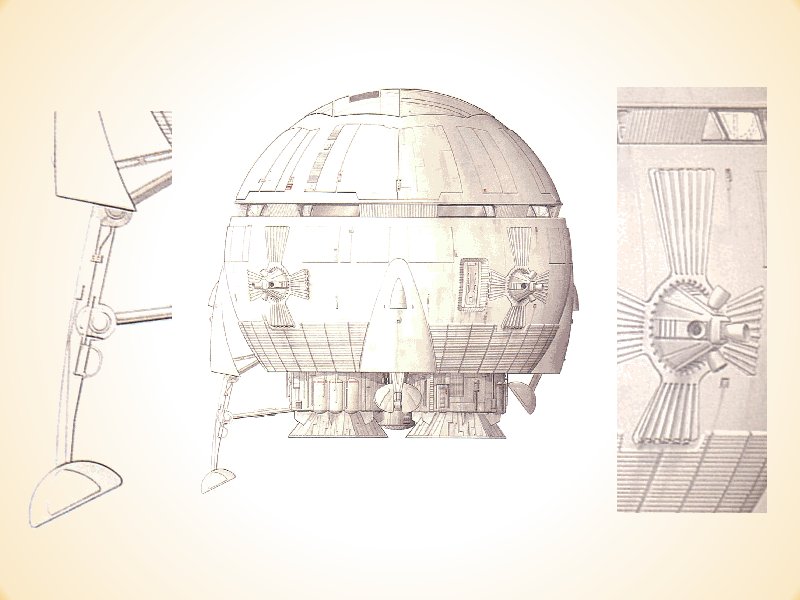
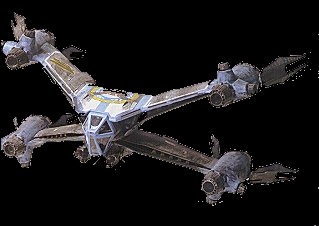
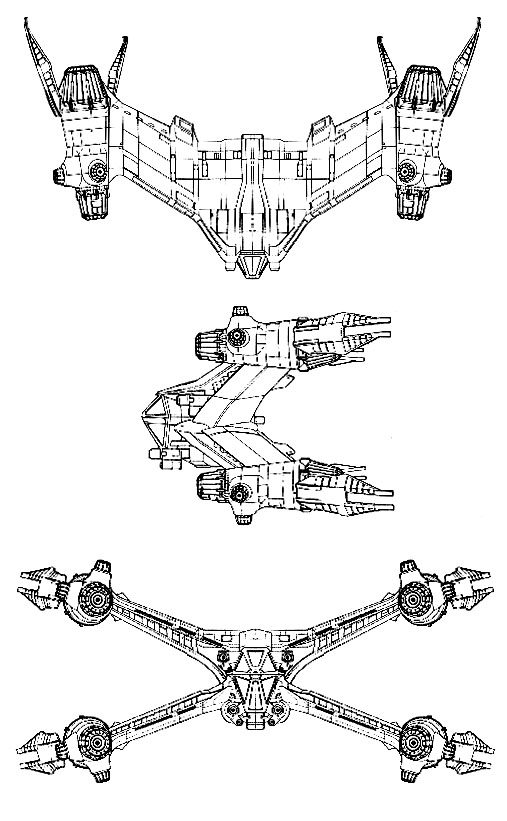
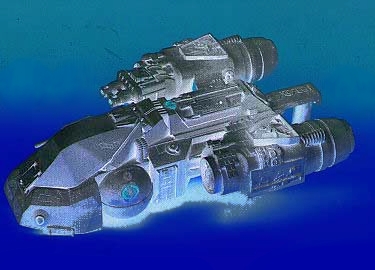
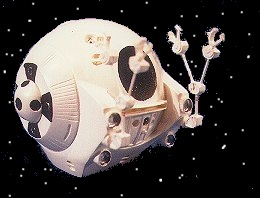
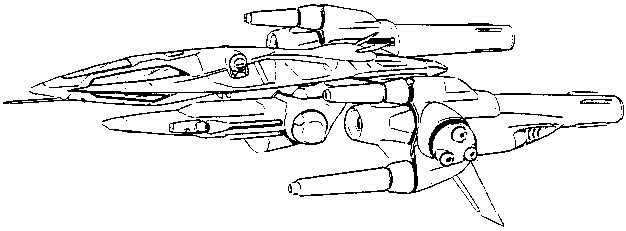
Kobune is an orbital ferry, capable of taking small craft to locations they couldn’t have reached on their own. It can exchange the flitters for cargo containers (each of them being roughly 30 m3 in volume). It is also used for military operations sometimes, carrying assault squad and either troop pods or small combat vehicles, like minifighters.  If no landing on any planetary body is planned, almost the whole “ring” part of the structure can be stowed up with cargo (giving out additional 200 m3 of cargo).

ARMAMENT: 2 (usually a railgun and a defensive weapon)


Model:
IEC Mammoth
Drive:
Chemical
Type:
Lander (Mars-Certified)
# burns:
6
Crew:
2
Power:
B, FC
Passengers:
15
sensors:
50%
Cargo: 200 m3 Computer Rating:
2
SP:
3
Actions/Turn:
1
DP:
8
Overkill:
3

Cost: 100 million eb
IEC Mammoth is the biggest planetary lander avalible. It was projected to shuttle large amounts of cargo and personnel form orbit to surface of Mars, but – until there’s a need for it – it’s used at Luna. Although Mammoth is a very cost-effective mean of moving bulk cargo, it is rarely needed.

ARMAMENT: 6 (usually defensive and missiles mix)


Model:
IEC Colt
Drive:
chemical
Type:
flitter
# burns:
4
Crew:
1
Power:
Batteries
Passengers:
0
sensors:
50%
Cargo: none Computer Rating:
2
SP:
0
Actions/Turn:
1
DP:
3
Overkill:
2

Cost:   20 million eb
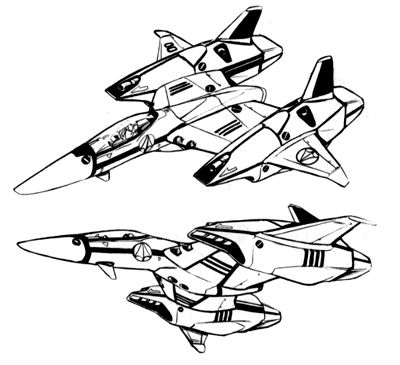
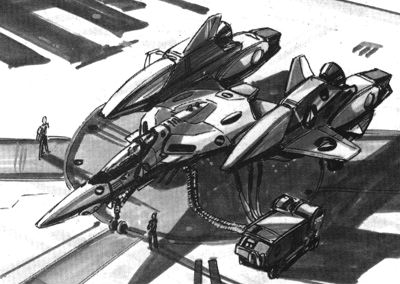
One of the early “minifighters”, Colt was an attempt to create a cheap spacefighter. It carries quite a punch for it’s size, packing two ASAT missiles. However, it’s fuel reserves makes it even less practical than a delta – Colt has to be launched from a space installation or carrier craft, as it cannot start from most space bodies on it’s own.

ARMAMENT: 3 (usually a kinetic weapon and 2 missiles)


Model:
Tupolev Tu-216 “Gryoza”
Drive:
chemical
Type:
Delta
# burns:
8
Crew:
2
Power:
B, FC
Passengers:
0
sensors:
55%
Cargo: 3 m3 Computer Rating:
2
SP:
2
Actions/Turn:
2
SDP:
6
Overkill:
2

Cost: 100 million eb
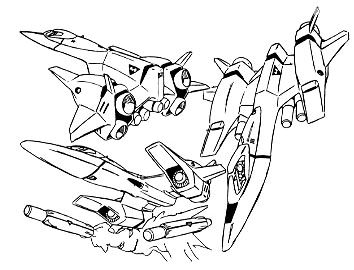
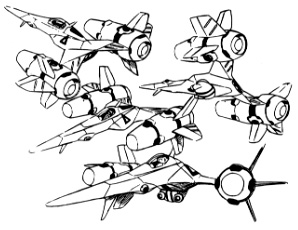
Gryoza (“Terror”) is the modern NeoSoviet delta, a sturdy, typically Russian combat spacecraft. While it can start from Earth on it’s own, Tu-216 is usually carried out by a rocket (space shuttle – like).

ARMAMENT: 8 (usually a defensive weapon, a kinetic weapon or railgun, and 6 missiles)


Model:
Aerospatiale “Tigre”
Drive:
chemical
Type:
delta
# burns:
8
Crew:
2
Power:
B, FC
Passengers:
0
sensors:
65%
Cargo: 2 m3 Computer Rating:
3
SP:
1
Actions/Turn:
2
DP:
5
Overkill:
2

Cost: 120 million eb
Effect of Euro-Soviet joint project, Tigre (Tiger) is more technologically advanced then Gryoza. In a typical Euro way, it has much better sensors and better processing power, although it carries less weaponary and is not as sturdy.  ESA doctrine calls Tigres operating in pairs, and they are usually launched into orbit as a pair carried by the same Ariane rocket. However (which is a quite unique capability) Tigres may choose to release themselves from the carrying rocket at any moment and enter the orbit on their own (which is intended as a measure for countering enemy counter-missile attacks).

ARMAMENT: 7 (usually two defensive, one projectile, 4 missiles)


Model:
Boeing Raptor
Drive:
chemical (jet turbine / scramjet)
Type:
delta / spaceplane (kind of...)
# burns:
5
Crew:
1
Power:
B
Passengers:
0
sensors:
30%
Cargo: 0
Computer Rating:
1
SP:
0
Actions/Turn:
1
DP:
2
Overkill:
1

Cost: 30 million eb  
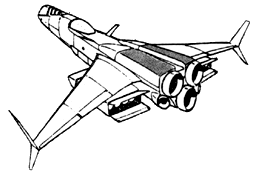
Raptor was one of the original low-orbital attack fighters, built for USAF. It is a clumsy jet, but it’s able of reaching high-atmosphere under conventional drive (thus it uses only 2 of it’s burns to leave Earth), then reaching the low orbit to attack it’s prey with it’s ASAT missiles.  It wasn’t wildly effective, and now is discontinued in favour of delta craft. Surplus Raptors are being sold on the open market, and some have been transported into orbit.
The idea however hadn’t vanished, and nowadays is continued in the form of minifighters.  (Note: while few are produced anymore, used models go for dirt cheap, around 2-3 mil eb usually)

ARMAMENT: 2 (missiles)


Model:
Boeing Raptor II
Drive:
chemical (jet turbine / scramjet)
Type:
delta / spaceplane (kind of...)
# burns:
5
Crew:
1
Power:
B
Passengers:
0
sensors:
35%
Cargo: 0
Computer Rating:
SP:
0
Actions/Turn:
1
DP:
2
Overkill:
2

Cost: 37 million eb
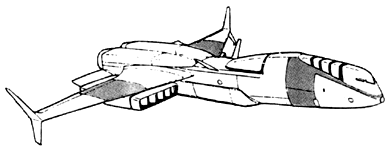
The upgraded and modified variant of the original Raptor, Raptor II is sturdier, better armed and has superior electronics. However, it had a short career, quickly replaced by true deltas. Only a few were produced. (note, while few new Raptor II's are produced, used ones are pretty cheap, like 3-4 million eb)

ARMAMENT: 3 (2 missiles and an early kinetic gun)


Model:
NASA Reagan-class
Drive:
chemical (scramjet)
Type:
spaceplane
# burns:
8
Crew:
2
Power:
B, FC
Passengers:
22
sensors:
50%
Cargo: 55 m3 Computer Rating:
SP:
0
Actions/Turn:
1
DP:
7
Overkill:
3

Cost: Cost: 300 million eb
Sucessor to the Orient Express series, Reagan is the modern US spaceplane. Not as big as Aries or Hermes, it has a better cargo capacity, and enough teeth to hold it’s own. NASA uses them to ferry personnel and supplies to it’s orbital installations.

ARMAMENT: 4 (usually 2 defensive, 2 missiles)


Model:
Bae Pilum
Drive:
chemical
Type:
flitter
# burns:
4
Crew:
1
Power:
B, FC
Passengers:
0
sensors:
55%
Cargo: 0
Computer Rating:
2
SP:
0
Actions/Turn:
1
DP:
4
Overkill:
2

Cost:  15 million eb
A modern minifighter from British Aerospace, Pilum is an as-is craft – it doesn’t carry much stuff, just a single railgun, but it serves well as a patrol craft, and thus is a welcomed “poor man’s delta” for smaller organisations.

ARMAMENT: 1 (kinetic gun)


Model:
Rockwell “Lark”
Drive:
chemical
Type:
work module
# burns:
3
Crew:
1
Power:
B, S
Passengers:
1
sensors:
30%
Cargo: 2 m3 Computer Rating:
1
SP:
1
Actions/Turn:
1
DP:
2
Overkill:
1

Cost: 3 million eb
The Lark is an orbital tugboat, used to ferry cargo containers between space stations. It is also used to assist in docking of large craft, for salvage operations, and to collect supply barges launched by massdrivers.  There were situations when Larks were equipped with weapons (usually kinetic guns or missiles), but they are not combat ships, and arming them is rather a desperate move.

ARMAMENT: 1 (usually not installed, as it would interfere with Lark’s primary function)


Model:
MDD Cyclops
Drive:
chemical
Type:
cargo OTV
# burns:
8
Crew:
2
Power:
B, FC
Passengers:
1
sensors:
50%
Cargo: 12x 30 m3 (detachable containers) Computer Rating:
2 
SP:
0
Actions/Turn:
1
DP:
8
Overkill:
4

Cost: 60 million eb
Cyclops is one of the heavy – duty vehicles used to haul cargo. Lots of cargo – 360 m3 of containerised cargo on each Cyclops. They’re big, not very fast or maneuverable, and usualy not used in military applications (even though their cargo capacity would make them useful as replenishment tenders).

ARMAMENT: 2 (usually at least one defensive)


Model:
MiG “Striela”
Drive:
chemical (jet turbine / scramjet)
Type:
delta / spaceplane (kind of...)
# burns:
4
Crew:
1
Power:
B
Passengers:
0
sensors:
25%
Cargo: 0
Computer Rating:
1
SP:
0
Actions/Turn:
1
DP:
2
Overkill:
2

Cost: 25 million eb
Russian equivalent to Raptor, Striela (“Arrow”) is slightly sturdier, but it’s electronics can’t stand to any standard. Still, if you want to trash something in space, and you want to do it cheap, a surplus Striela (and Soviets sell them used for about 2 million eb, few questions asked), is the best option.

ARMAMENT:


Model:
Grumman “Shadow”
Drive:
chemical
Type:
combat OTV
# burns:
10
Crew:
2
Power:
B, FC
Passengers:
0
sensors:
60%
Cargo: 1 m3 Computer Rating:
2
SP:
2
Actions/Turn:
2
DP:
7
Overkill:
4

Cost: 100 million eb
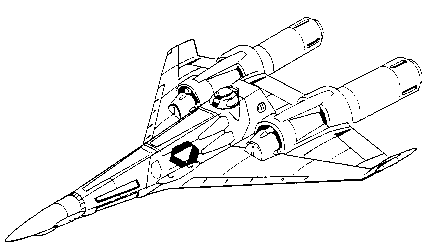
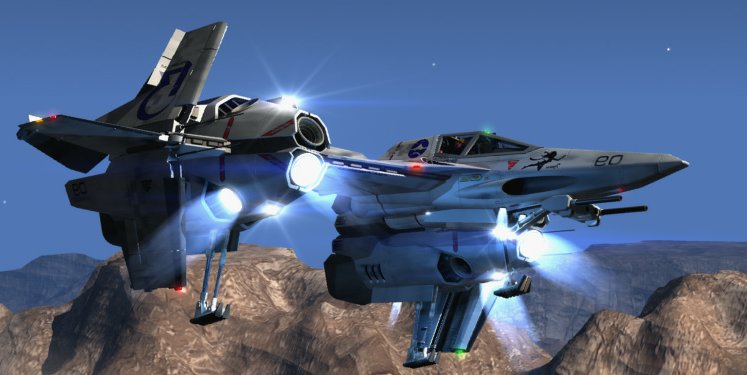
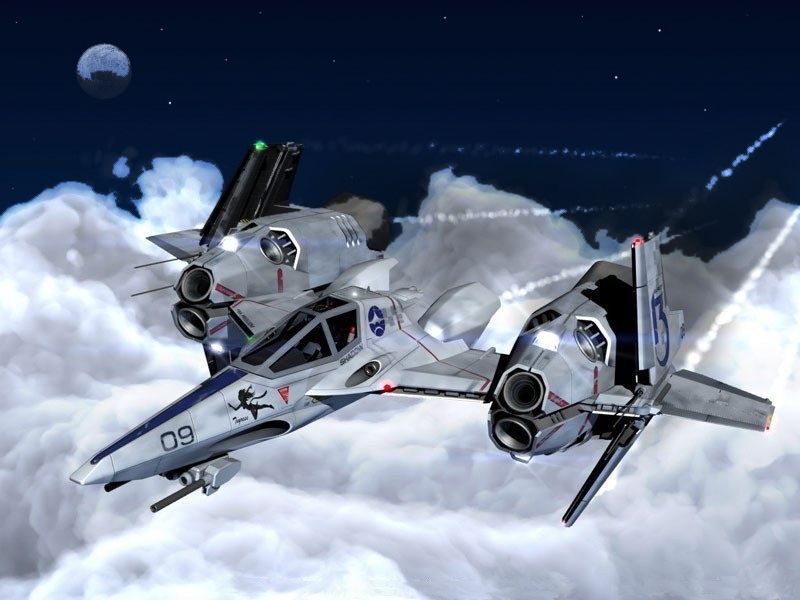
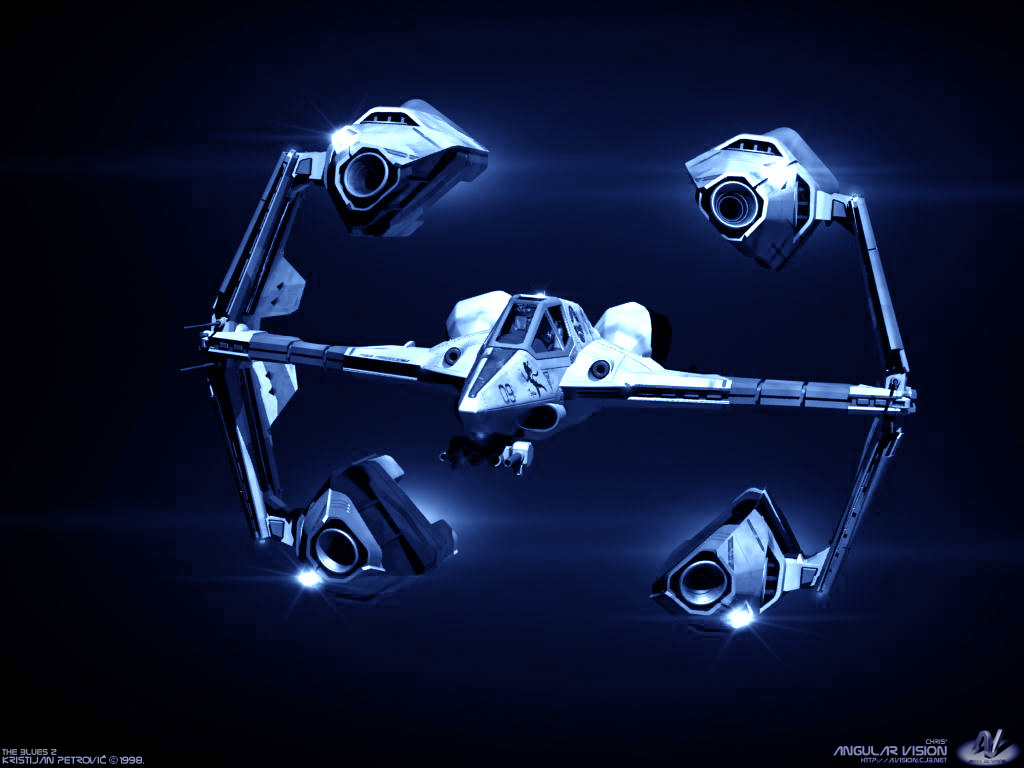
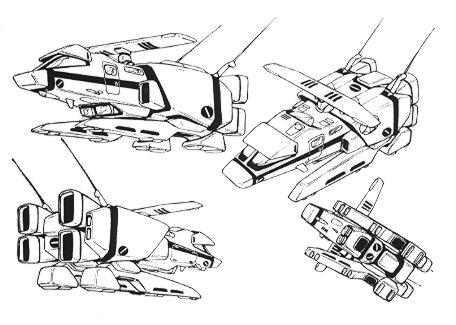
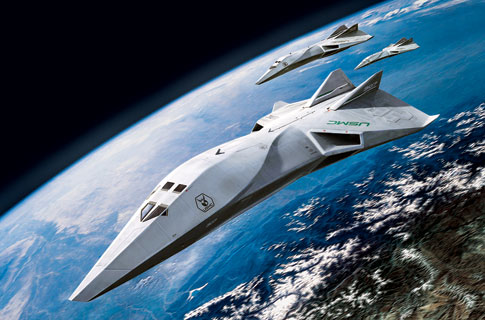
Shadow (and it’s competitior, Spectre) are USAF’s projects for creating space superiority. These craft resemble deltas, but they are not meant to operate from Earth (however, they are streamlined, so they can handle limited atmosphere, like upper levels of Earth’s and Mars’ atmospheres) – they will operate from carrier craft, asteroid bases (like the Kirkwood station), and – in a pinch – from Luna.

ARMAMENT: 8 (usually one defensive, one kinetic – the turret under the nose - and six missiles)


Model:
Northrop “Spectre”
Drive:
chemical
Type:
combat OTV
# burns:
10
Crew:
2
Power:
B, FC
Passengers:
0
sensors:
70%
Cargo: 1 m3 Computer Rating:
2 
SP:
1
Actions/Turn:
2
DP:
6
Overkill:
3

Cost: 90 million eb
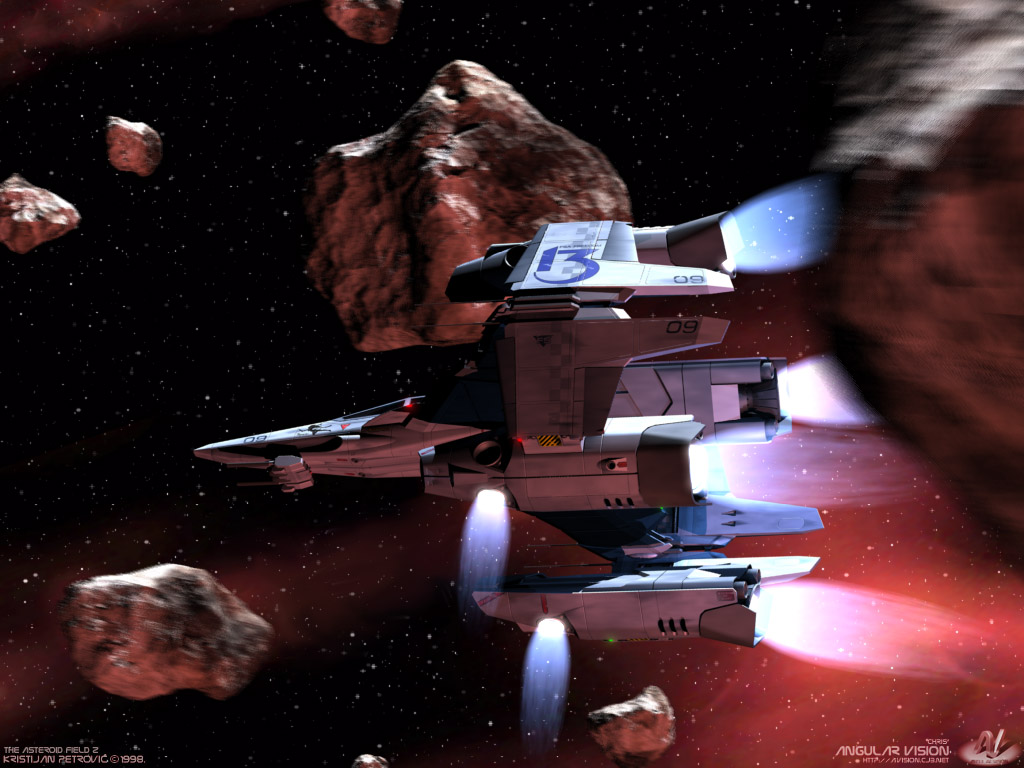
Main competitior to Shadow, Spectre is a bit more fragile, but also lighter and equipped with superior electronics.

ARMAMENT: 8 (usually one defensive, one kinetic, two missiles)


Model:
Mitsubishi “Gunstar”
Drive:
chemical
Type:
combat OTV
# burns:
12
Crew:
2
Power:
B, FC
Passengers:
0
sensors:
65%
Cargo: 1 m3 Computer Rating:
3
SP:
2
Actions/Turn:
2
DP:
8
Overkill:
4

Cost: 138 million eb
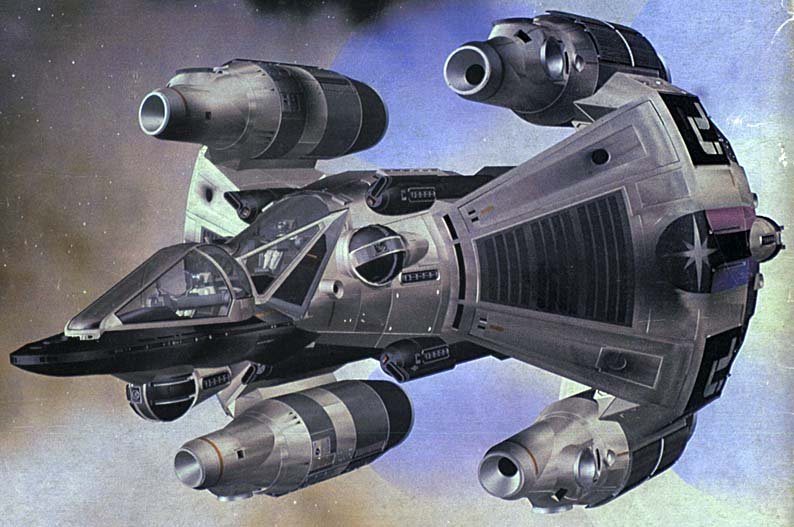
Late to the competition between the Shadow and the Spectre, the Gunstar from Mitsubishi takes the best ideas from both and then crams even more into a package only slightly larger and more expensive.

ARMAMENT: 8 (usually 2 defensive, 2 kinetic, 4 missiles)


Model:
JAB L-6 (aka “Lobster”)
Drive:
chemical
Type:
Maintenence OTV
# burns:
10
Crew:
2
Power:
B, FC, S
Passengers:
1
sensors:
50%
Cargo: 20 m3 Computer Rating:
  2
SP:
2
Actions/Turn:
2
DP:
6
Overkill:
4

Cost: 70 million eb
One of the more common OTVs, Lobster is often criticized for it’s fragile construction. However, it’s still a very useful vehicle, and it’s manipulator arms are quite precise. If you don’t press it into duty under fire, you can trust the Lobster to get the work done.

ARMAMENT: none


Model:
Aerospatiale VA-22 (aka “le Metro”)
Drive:
chemical
Type:
passenger OTV
# burns:
10
Crew:
4
Power:
B, FC, S
Passengers:
16
sensors:
45%
Cargo: 2x10 m3 Computer Rating:
2
SP:
1
Actions/Turn:
1
DP:
5
Overkill:
3

Cost: 45 million eb
One of the older, less sturdy OTV models, Metro (“subway”) is still quite popular, especially when it comes to moving personnel over longer distances. While slightly outdated, this craft has proportionally spacious living quarters, arranged with the comfort only the French are able to acheive. Not that they are outright luxurious, but Metros were projected in the time predating modern “single open space” conception, and thus are heavily divided into small, but comfortable living spaces, and a lot of effort was put into keeping crew and passangers comfortable on longer voyages.

ARMAMENT: 1


Model:
Mitsubishi Kogai
Drive:
chemical
Type:
delta
# burns:
7
Crew:
3
Power:
B, FC
Passengers:
10
sensors:
80%
Cargo: 4 m3 Computer Rating:
3  
SP:
1
Actions/Turn:
3
DP:
5
Overkill:
2

Cost: 110 million eb
This otherwise nondescript Japanese delta outclasses it’s competitiors when it comes down to electronics. Sensor package is superior to any Euro or American model, and the computers onboard allow the single pilot to control Kogai better than any two-man crew on competitor ships.

ARMAMENT: 7 (usually one defensive, one laser, one kinetic and 4 missiles)


Model:
JAB L-4 (aka “Rabbit”)
Drive:
chemical
Type:
passenger OTV
# burns:
8
Crew:
3
Power:
B, FC
Passengers:
10
sensors:
50%
Cargo: 20 m3 Computer Rating:
2
SP:
1
Actions/Turn:
1
DP:
5
Overkill:
3

Cost: 35 million eb
The Rabbit is a Mitsubishi shuttle OTV popular with corporate foremen and spacer families who can afford it. Slightly outdated, however it handles well, and can carry a fair amount of people and equipment.

ARMAMENT: none


Model:
Dornier Sternjager
Drive:
chemical (jet turbine / scramjet)
Type:
delta / spaceplane (kind of...)
# burns:
5
Crew:
1
Power:
B
Passengers:
0
sensors:
30%
Cargo: 0
Computer Rating:
  1
SP:
0
Actions/Turn:
1
DP:
2
Overkill:


Cost: 35 million eb
European equivalent to Raptor and Striela, Sternjager (“Starfighter”) is quite heavily armed for it’s size – and odd move, considering typical Eurpean tendency to go rather sensor-heavy than gun-heavy. It was produced in very limited numbers and sells used for 3-4 millin eb.

ARMAMENT: 4 (missiles)


Model:
Utopia Vulture
Drive:
chemical
Type:
flitter
# burns:
4
Crew:
1
Power:
B
Passengers:
0
sensors:
50%
Cargo: 0
Computer Rating:
SP:
0
Actions/Turn:
1
DP:
3
Overkill:
1

Cost:  13 million eb
A product of the orbital Utopia corporation, Vulture presents yet another approach to the minifighter idea. Small, light, and dirt cheap, it however gets the job done.

ARMAMENT: 1 (twin laser, counts as single weapon)


Model:
Boeing/NASA Atlantis
Drive:
chemical
Type:
mini-shuttle
# burns:
5
Crew:
2
Power:
B
Passengers:
6
sensors:
50%
Cargo: 50 m3 Computer Rating:
2  
SP:
1
Actions/Turn:
2
DP:
7
Overkill:
3

Cost: 100 million eb
A nondescript space shuttle from Boeing, it sacrifices combat capabilities for passenger spaces. All in all, this makes it a pretty universal vehicle, well-selling on the private market.

ARMAMENT: 2


Model:
IEC OTV (aka “Brick”)
Drive:
chemical
Type:
OTV
# burns:
7
Crew:
4
Power:
B, FC, S
Passengers:
3
sensors:
30%
Cargo: 2x 10 m3 Computer Rating:
1
SP:
2
Actions/Turn:
1
DP:
7
Overkill:
3

Cost: 30 million eb
The Brick (named after it’s slab-like appearance) was the first OTV produced. Nowadays, it’s long outclassed by newer, shinier, and more effective models – but still can be ecountered sometimes, usually as a corporate executives private vehicle, or in the hands of a smaller spacer work crew.

ARMAMENT: 1 (usually none installed)


Model:
Aerospatiale VM-2 (aka “Bubble”)
Drive:
chemical
Type:
work module
# burns:
2
Crew:
1
Power:
B, S
Passengers:
0
sensors:
30%
Cargo: 4 m3 Computer Rating:
1
SP:
1
Actions/Turn:
1
DP:
3
Overkill:
1

Cost:  4 million eb
The Bubble is the standard work module in ESA stations. Whereas not very sturdy, it does well in it’s usual assiginment, and is pretty comfortable – thus allowing for prolonged shifts without loosing concentration.

ARMAMENT: none


Model:
Orbital Air Seraphim
Drive:
chemical
Type:
delta
# burns:
7
Crew:
2
Power:
B, FC
Passengers:
0
sensors:
55%
Cargo: 2 m3 Computer Rating:
2
SP:
1
Actions/Turn:
2
DP:
5
Overkill:
2

Cost: 80 million eb
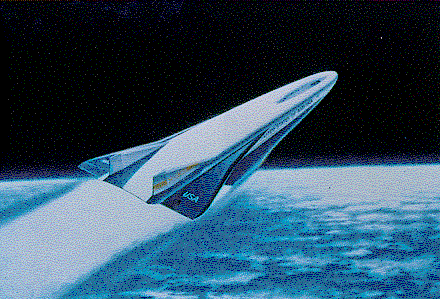
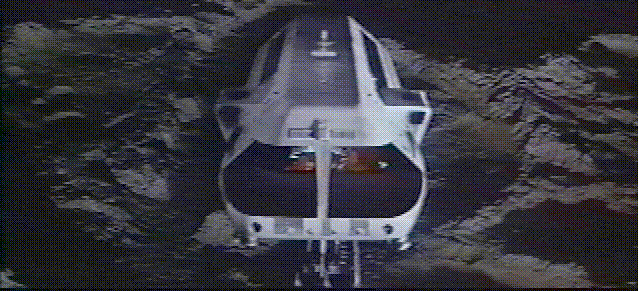
Another nondescript delta, OA’s Seraphim is a typical example of it’s class nowadays. Here, shown in the last phase of launch, just before jettisoning the external fuel tank it uses to reach the orbit.

ARMAMENT: 8 (usually one defensive, one laser, 6 missiles)


Model:
Orbital Air Pegasus
Drive:
chemical
Type:
spaceplane
# burns:
8
Crew:
3
Power:
B, FC
Passengers:
8
sensors:
50%
Cargo: 20 m3 Computer Rating:
  3
SP:
0
Actions/Turn:
2
DP:
7
Overkill:
3

Cost: 240 million eb
Pegasus is another surface-to-orbit vessel meant for the private sector. It has ferrying capabilities slightly better than JAB TAV-12 (it carries twice that much personnel, although slightly less cargo).

ARMAMENT: 3 (usually two defensive and a kinetic gun)


Model:
Utopia Mosquito
Drive:
chemical
Type:
delta (sort of...)
# burns:
7
Crew:
1
Power:
B, FC
Passengers:
0
sensors:
60%
Cargo: 2 m3 +2 containers Computer Rating:
SP:
1
Actions/Turn:
2
DP:
5
Overkill:
2

Cost: 120 million eb
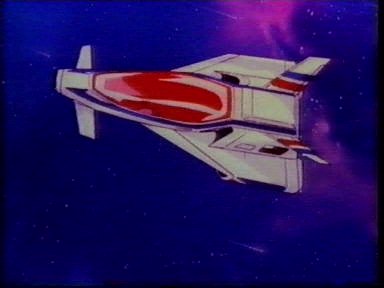
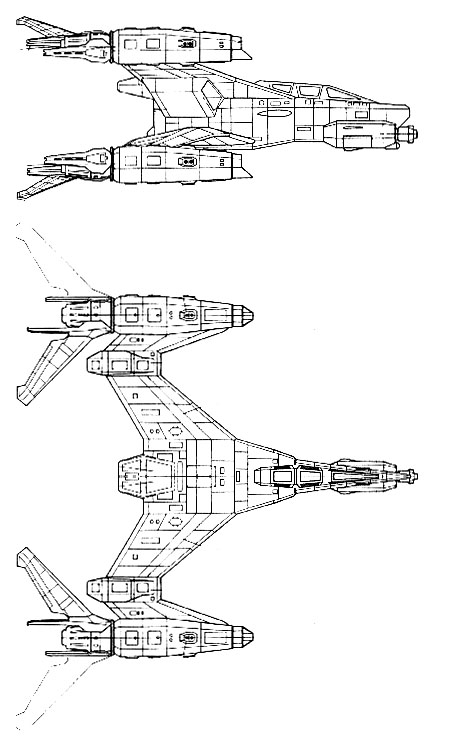
The Mosquito is Utopia’s concept of future delta. While it can operate form ground bases (like those on Earth), it’s home is in space. Mosquito is an odd hybrid between delta and a tug, but that’s what Utopia’s concept calls for: universatility. Mosquito can carry two 30 m3 tubular containers – either with supplies (allowing it to assume the role of a fleet replenishment tender) or with EVA troops, allowing it to perform boarding actions (the containes can be jettisoned towards the target from a distance).
Currently, Utopia is working on container-shaped missile pods, mine dispensers and orbital bombs.

ARMAMENT: 6 (usually two defensive, one laser, one kinetic, two missiles)


Model:
Rockwell Corsair
Drive:
chemical
Type:
flitter
# burns:
4
Crew:
1
Power:
B, FC
Passengers:
0
sensors:
60%
Cargo: 0
Computer Rating:
2 
SP:
1
Actions/Turn:
1
DP:
4
Overkill:
2

Cost: 20 million eb
Another minifighter, this time meant fot USAF, Corsair is sturdy and modern. It is, however, quite expensive for it’s class as well.

ARMAMENT: 2 (twin laser in belly turret and a kinetic weapon)


Model:
Antonov “Shkhval”
Drive:
chemical, nuclear
Type:
clipper
# burns:
8, 12
Crew:
2
Power:
B, FC, N
Passengers:
2
sensors:
55%
Cargo: 70 m3, 1 OTV Computer Rating:
2
SP:
1
Actions/Turn:
2
DP:
6
Overkill:
2

Cost: 80 million eb
One of the first clippers, “Shkhval” (Sea storm) from Russian Antonov Construction Bureau is a robust, fast craft with decent cargo capacity for it’s class. However, this is the end of it’s advantages, as crew quarters are tight, cramped, and definitely projected by someone who never heard about ergonomy.
No ideas for the below:

ARMAMENT: 1 (usually not installed)


SPACESUITS:


U.S.A.F.
R.S.F.
E.S.A. NASA J.A.S.F. Workganger
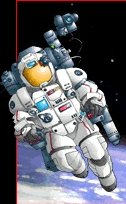
The American suit is very form fitting and streamlined.  This is possible due to advancements in Datafiber and insulation technology.  Overall this suit is very comfortable, and can be worn for extended periods.
(32,000 eb)
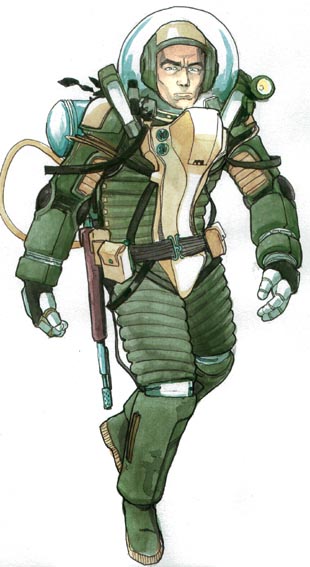
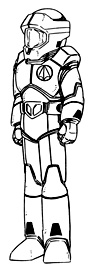
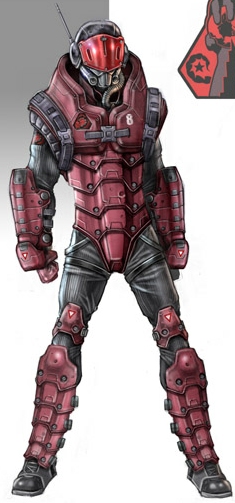
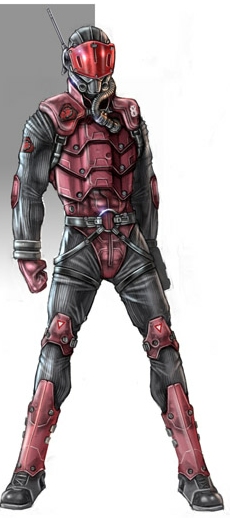
The Russian suit is also fairly snug, and similiarly comfortable.  For maximum visibility they went with a slef tinting bubble helmet, the tinting is nearly instantaneous and can block light nearly completely at its highest setting.
(23,750eb)
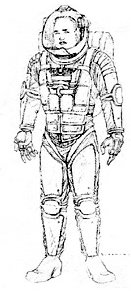
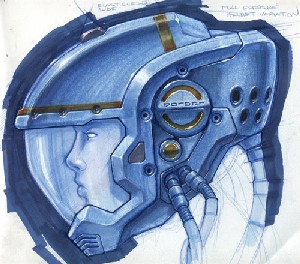
The ESA suit has very clean lines, due to it's crabshell like armor plates (sp: 10), this suit protects the wearer from stray debris.
(21,500 eb)
NASA's suit hasn't changed much visually over the years, and it is still sets the standard for extended EVA wear.
(15,000eb)
Japan's space suit is a mix of the datafiber technology and the standard space suit design, which suits the Japanese research astronauts perfectly.
(19,475eb)
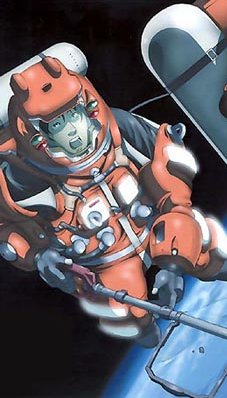
Corporate and civilian suits come in a wide assortment of styles and colors from a varied list of manufacturers.  However as most of the suits are worn by workgangers performing EVA maintenence, they must be built to the highest standards.  Some of the more high end suits are in fact superior to even NASA's model. 15-30,000eb


BATTLE SUITS:
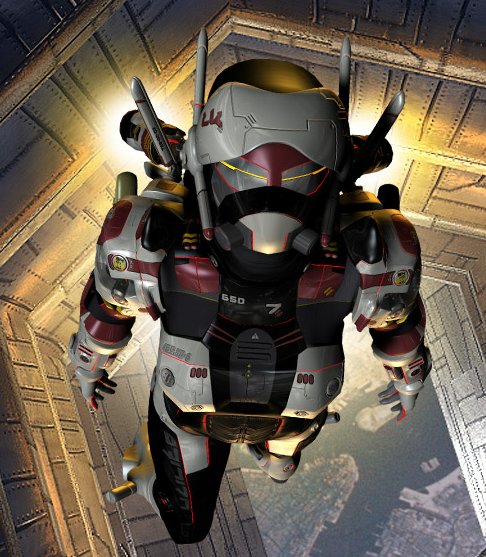
In addition to providing combat protection, these suits must all also be usable and safe in the vacuum of space.  They all feature magnetic boots, independent oxygen supply (10 mins), wound monowire tethers with a mag-grapnel, and laser communicators.  The helmets all feature  a cyber link relay and room for 4 visual options.

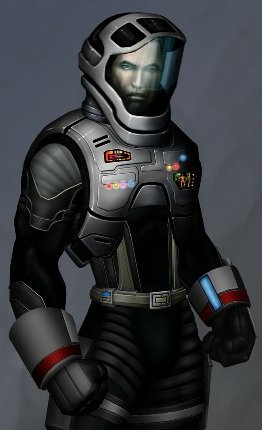
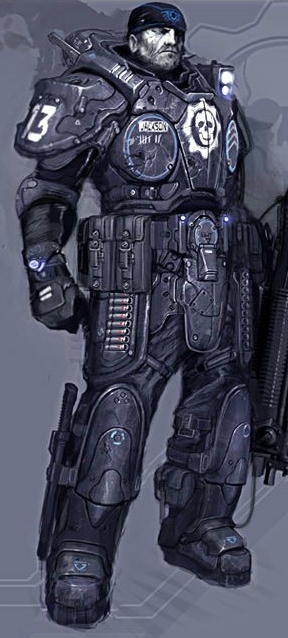
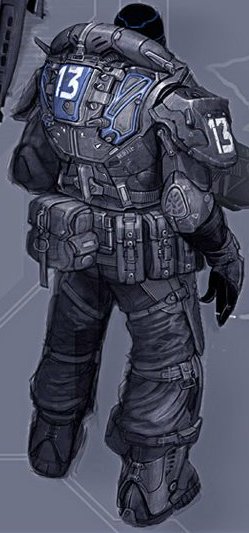
The USAF combat suit is the most heavily armored, protecting the wearer with a mix of hardshell and soft armor layers. (SP:30 EV:3 52,350eb)


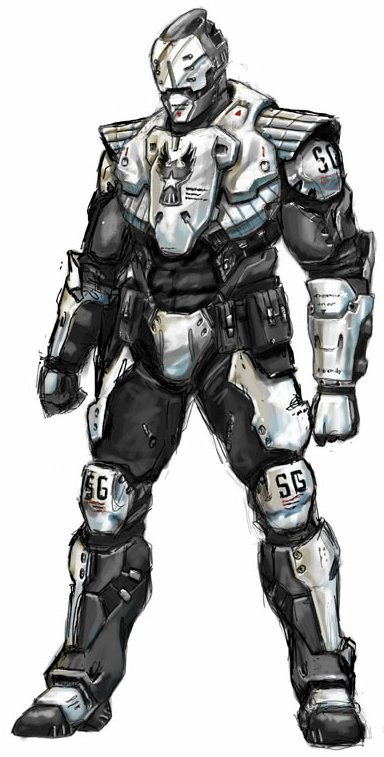
The ESA combat suits are more streamlined than that of the americans, not as heavy either.  In fact these suits fetch quite a price on the black market, even planetside. (SP:20 EV:1 64,500eb)

Worn right over the skin suit, the Russian armor is modular, and can be stripped down for lighter duty.  It too fetches a high price on the blackmarket, in orbit and planetside, due to its high armor, full insulation, and temperature control.  (SP:15/18 EV:0 68,450eb)

The Arasaka Orbital Combat suit is used by Arasaka and other private Space companies security forces, in case  a competitor decides to make a move, or the Big three get too antsy.  It is by bar the most advanced of the suits, and is very nearly a hardsuit.  It performs all the funtions of a fullsized space suit plus it has a spacial therm-optic camoflage coating.  Both black market demand, and the price for this suit is as astronmical as its intended environment.
(SP:20 EV-0 78,320eb)

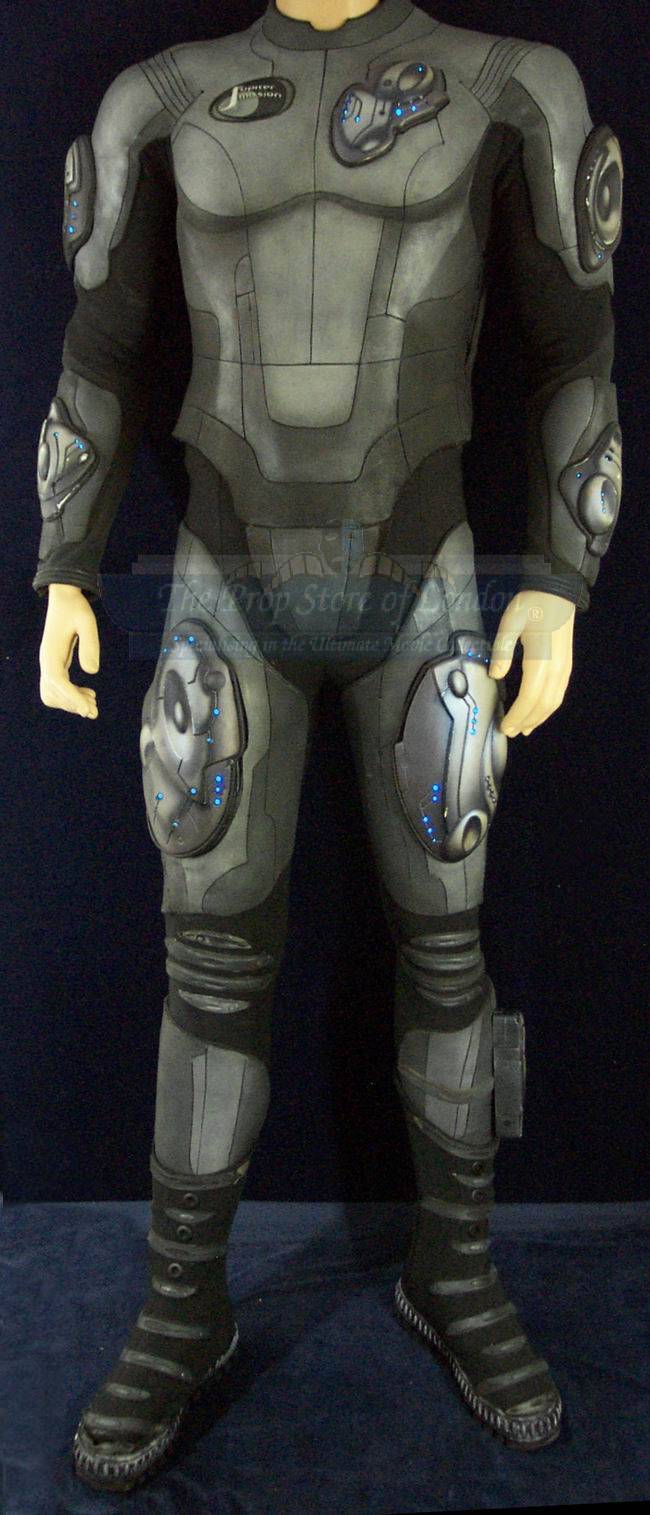
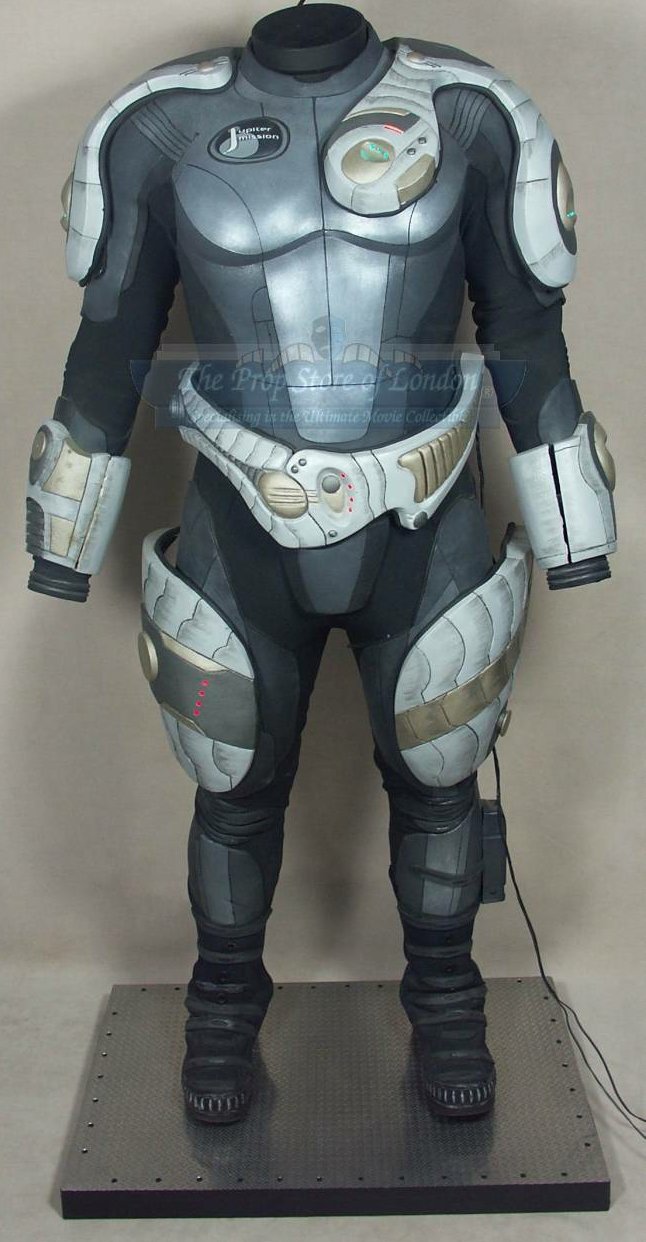
Regardless of whether wearing a standard space suit or a battlesuit, a skin suit is usually worn underneath.  They provide an extra layer of protection in case of outer suit breach.  It is recommended that if you are under even the slightest risk of decompression that you be wearing a skinsuit at all times.  Skinsuits are made by many different companies, and both prices and styles vary greatly.  Pictured is the USAF version, it feature bio-monitors and removable equipment pouches, cyberdeck, communications and information gauntlets, and belt computer.  It is also lightly armored (SP:6)


BACK TO MILITARY/CORPORATE CATALOGUE
BACK TO DATAFORTRESS 2020


Written by Mike Van Atta and Deric Bernier, images from Macross, Gundam, Planetes, 2001, Lost in Space, Jovian Chronicles, and various other unkown anime and artists