(CYBERNETIC CRIMES DIVISION)
WHEN THERE'S TROUBLE IN PARADISE
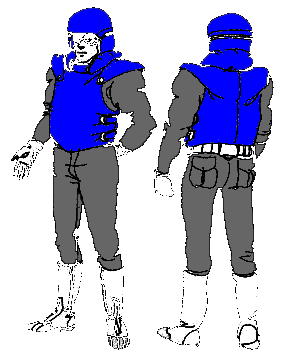
 There was a time when C-SWAT was nothing more than an
advanced SWAT
team designed specifically to take down rampaging cyberpsychos.
All too often, C-SWAT team members were on the brink od cyberpsychosis
themselves, and they were seen by the general public as almost worse
than the menace they were there to fight. Reports of abuse and
wanton property damage were rampant and things were spiraling quickly
out of control.The department was left with 2 choices, end the program
altogether, and
There was a time when C-SWAT was nothing more than an
advanced SWAT
team designed specifically to take down rampaging cyberpsychos.
All too often, C-SWAT team members were on the brink od cyberpsychosis
themselves, and they were seen by the general public as almost worse
than the menace they were there to fight. Reports of abuse and
wanton property damage were rampant and things were spiraling quickly
out of control.The department was left with 2 choices, end the program
altogether, and 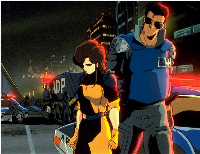 let SWAT handle the
situation, or start over again from
scratch. In a last ditch effort the entire program was
overhauled. Anyone without prior police work was suspended
and sent back through the academy. Even those who had military
experience. They began a recruitment drive within the department,
targeting detectives, and pulling equally from all branches of the
detective pool through a selective screening process which took not
only their experience as investigators into account, but also physical
fitness and mental stability.
let SWAT handle the
situation, or start over again from
scratch. In a last ditch effort the entire program was
overhauled. Anyone without prior police work was suspended
and sent back through the academy. Even those who had military
experience. They began a recruitment drive within the department,
targeting detectives, and pulling equally from all branches of the
detective pool through a selective screening process which took not
only their experience as investigators into account, but also physical
fitness and mental stability.
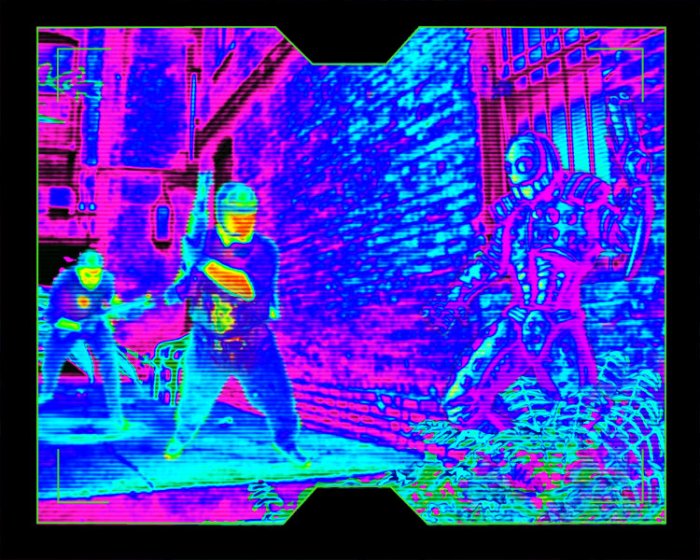 Not only were the members of the Unit replaced, but so
was the
structure of the unit itself. C-SWAT started out as nothing more
than a tactical response unit, today C-SWAT is in charge of all
cyberentic crimes. Even the name has changed, now the unit is
Called CCD (Cybernetic Crimes Division), though to most cops, and
criminals, it's still C-SWAT. They handle every aspect of
Cybernetic crime investigation and enforcement.
every aspect of
Not only were the members of the Unit replaced, but so
was the
structure of the unit itself. C-SWAT started out as nothing more
than a tactical response unit, today C-SWAT is in charge of all
cyberentic crimes. Even the name has changed, now the unit is
Called CCD (Cybernetic Crimes Division), though to most cops, and
criminals, it's still C-SWAT. They handle every aspect of
Cybernetic crime investigation and enforcement.
every aspect of 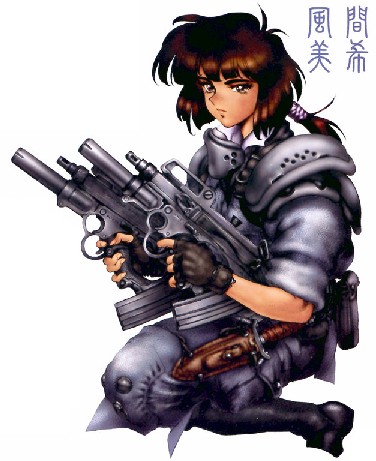 Cybernetic crimes,
from investigation to
suppression.
Due to the delicate nature of Cybernetic crimes C-SWAT duties often
spill
over
into other areas, such as Homicde, Vice, and Narcotics, even SVU.
They are expected to work with these other units, but often their
involvement in the investigations side of things is unwelcome by
investigators from other units. Cybernetic registration is also
done through CCD, and it is mandatory all clinics, hospitals, and
upgrade techs submit complete and up to date records of everyone who
undergoes cybernetic implantation or upgrade. Of course this has
increased the number of black market ripperdoc clinics, and the number
of unregistered implants is high.
Cybernetic crimes,
from investigation to
suppression.
Due to the delicate nature of Cybernetic crimes C-SWAT duties often
spill
over
into other areas, such as Homicde, Vice, and Narcotics, even SVU.
They are expected to work with these other units, but often their
involvement in the investigations side of things is unwelcome by
investigators from other units. Cybernetic registration is also
done through CCD, and it is mandatory all clinics, hospitals, and
upgrade techs submit complete and up to date records of everyone who
undergoes cybernetic implantation or upgrade. Of course this has
increased the number of black market ripperdoc clinics, and the number
of unregistered implants is high.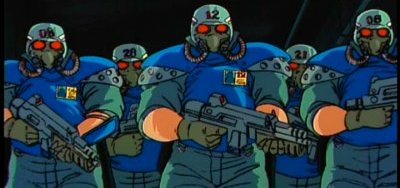
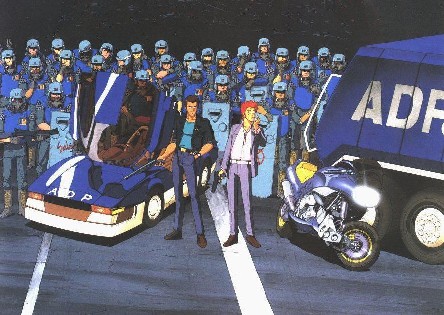 Of course in addition to the investigations and
regulation of
cybernetics they are still every bit the Tactical Response Unit they
always were. Each member is required to undergo rigorous weapons
and tactics training, often more intense than that of SWAT. While
each member of a CCD squad has his or her own strengths, specialist
roles
Of course in addition to the investigations and
regulation of
cybernetics they are still every bit the Tactical Response Unit they
always were. Each member is required to undergo rigorous weapons
and tactics training, often more intense than that of SWAT. While
each member of a CCD squad has his or her own strengths, specialist
roles  are
discouraged. Training is broad and cross purpose, so
that each member is competent in all tactical situations and is
maximized for versatility. C-SWAT is volunteer only, although
they do actively recruit and headhunt within the department.
Anyone may join, provided they meet the requirements, which are a
minimum of 5 years on the force, high physical fitness, and a clean
mental state as evaluated by Police therapists.
are
discouraged. Training is broad and cross purpose, so
that each member is competent in all tactical situations and is
maximized for versatility. C-SWAT is volunteer only, although
they do actively recruit and headhunt within the department.
Anyone may join, provided they meet the requirements, which are a
minimum of 5 years on the force, high physical fitness, and a clean
mental state as evaluated by Police therapists.  Detectives
and
those with military special forces training are the most sought after
candidates. Upon acceptance into CCD, each member must undergo a rigorous
3 month training course (although if the
officer
has military combat experience he or she may choose to skip the
Detectives
and
those with military special forces training are the most sought after
candidates. Upon acceptance into CCD, each member must undergo a rigorous
3 month training course (although if the
officer
has military combat experience he or she may choose to skip the  extra
training,
most don't). Once a member of C-SWAT, the officer is assigned to
a squad. The training doesn't stop there, as the squad must
continue
training one weekend a month and are required to attend a week
long
intensive training course twice a year.
extra
training,
most don't). Once a member of C-SWAT, the officer is assigned to
a squad. The training doesn't stop there, as the squad must
continue
training one weekend a month and are required to attend a week
long
intensive training course twice a year. In
addition to being competent in law enforcement and investigation, each
C-SWAT officer is
trained to be proficient in marksmanship, with competence of most
firearms,
first aid, insertion, extraction, hostage rescue and anti-terrorist
tactics,
EOD, ACPA piloting, THAMOC, and all cybernetic systems.
In
addition to being competent in law enforcement and investigation, each
C-SWAT officer is
trained to be proficient in marksmanship, with competence of most
firearms,
first aid, insertion, extraction, hostage rescue and anti-terrorist
tactics,
EOD, ACPA piloting, THAMOC, and all cybernetic systems. Members of a C-SWAT squad are organized into 8-10 man
teams called SPAR
units. Cases are assigned to an individual SPAR unit, and within
the unit members will work with a partner or small group. During
tactical situations the entire team works together, and the team is
trained to operate autonomously, though occasions have arisen where
multiple SPAR teams must work with each other under a higher command.
Members of a C-SWAT squad are organized into 8-10 man
teams called SPAR
units. Cases are assigned to an individual SPAR unit, and within
the unit members will work with a partner or small group. During
tactical situations the entire team works together, and the team is
trained to operate autonomously, though occasions have arisen where
multiple SPAR teams must work with each other under a higher command.
A SAMPLE C-SWAT SPAR UNIT
 Up until recently, CCD operated out of Central Police
Plaza One.
But it has grown to large and has been moved to its own building, a 15
story headquarters, located 3 blocks from CPP1. The underground
garage is large enough to hold 5 SWAT Delivery Vehicles, 15
Up until recently, CCD operated out of Central Police
Plaza One.
But it has grown to large and has been moved to its own building, a 15
story headquarters, located 3 blocks from CPP1. The underground
garage is large enough to hold 5 SWAT Delivery Vehicles, 15  Tomcats,
2
Arasaka ATT-88's, 1 Horse, 6 Volksrad Police Buggies, 1 Mitsubishi
Musashi mini-tank, 8 Constitutional Arms "Constable" ACPA, and 8
Arasaka "Bladerunner" ACPA. Beneath the garage is a fortified
holding cell capable of detaining up to 40 people, and 5 reinforced
individual detention cells designed specifically to hold
individuals
who have undergone Full Conversion Replacement. The wide roof
houses 2 helipads with refueling stations and has a hanger large enough
to store 3 AV-6's, 5 AV-3's and another 8 small aerodynes.
Additionally the building houses barracks for up to 20 men and women,
full shower facilities, a large armory and reinforced shooting range,
it's own Net-Sec unit (required to keep track of cyber-registration and
provide online backup), investigators offices, breifing rooms, and
Tomcats,
2
Arasaka ATT-88's, 1 Horse, 6 Volksrad Police Buggies, 1 Mitsubishi
Musashi mini-tank, 8 Constitutional Arms "Constable" ACPA, and 8
Arasaka "Bladerunner" ACPA. Beneath the garage is a fortified
holding cell capable of detaining up to 40 people, and 5 reinforced
individual detention cells designed specifically to hold
individuals
who have undergone Full Conversion Replacement. The wide roof
houses 2 helipads with refueling stations and has a hanger large enough
to store 3 AV-6's, 5 AV-3's and another 8 small aerodynes.
Additionally the building houses barracks for up to 20 men and women,
full shower facilities, a large armory and reinforced shooting range,
it's own Net-Sec unit (required to keep track of cyber-registration and
provide online backup), investigators offices, breifing rooms, and interrogation rooms. In addition to the SPAR teams, the building
employs a crack Net-Sec team, administration, and a full maintenence
and repair crew. The secure ground level parking garage holds up
to 100 vehicles and is used for both employee and visitor
parking. Because OF the high stress and frequent need for
cybernetic replacement due to on the job injury, the building also has
a small staff of therapists specializing in trauma recovery, well
being, and rehabilitation after cybernetic implantation.
interrogation rooms. In addition to the SPAR teams, the building
employs a crack Net-Sec team, administration, and a full maintenence
and repair crew. The secure ground level parking garage holds up
to 100 vehicles and is used for both employee and visitor
parking. Because OF the high stress and frequent need for
cybernetic replacement due to on the job injury, the building also has
a small staff of therapists specializing in trauma recovery, well
being, and rehabilitation after cybernetic implantation.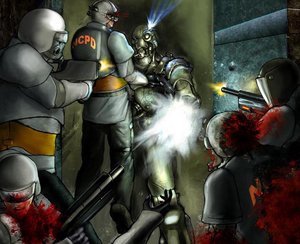 C-SWAT members face
the highest mortality rate on the police
force. Death and injury are common occurences, and in addition to
maintaining combat readiness, each officer must also be a competant
investigator. This creates a very high stress environment, and
burn out is an
C-SWAT members face
the highest mortality rate on the police
force. Death and injury are common occurences, and in addition to
maintaining combat readiness, each officer must also be a competant
investigator. This creates a very high stress environment, and
burn out is an  ever rising
concern. It is for these reasons that
C-SWAT members recieve pay second only to Bomb Squad, and have 3 days
off as standard.
ever rising
concern. It is for these reasons that
C-SWAT members recieve pay second only to Bomb Squad, and have 3 days
off as standard. Due to departmental policy, C-SWAT has by far the most full conversions serving with it, which helps nicely in dealing with the threat of augmented individuals.
CCD SPAR teams still back up SWAT, and are all still on call for emergency tactical situations.

The following are just a few areas that fall under CCD jurisdiction:
The possession, manufacture, or distribution of unregistered Cyberware
Cyberneticly augmented felons and suspects
The theft and sale of cybernetic implants
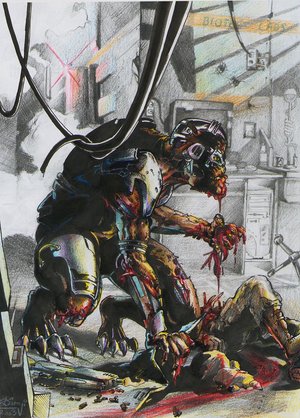
Suppresion or capture Individuals suffering from Acute Cyber-Psychotic Rage Syndrome (cyberpsychosis)
Cybernetic Registration Enforcement
Cybernetic Implant Safety Standards
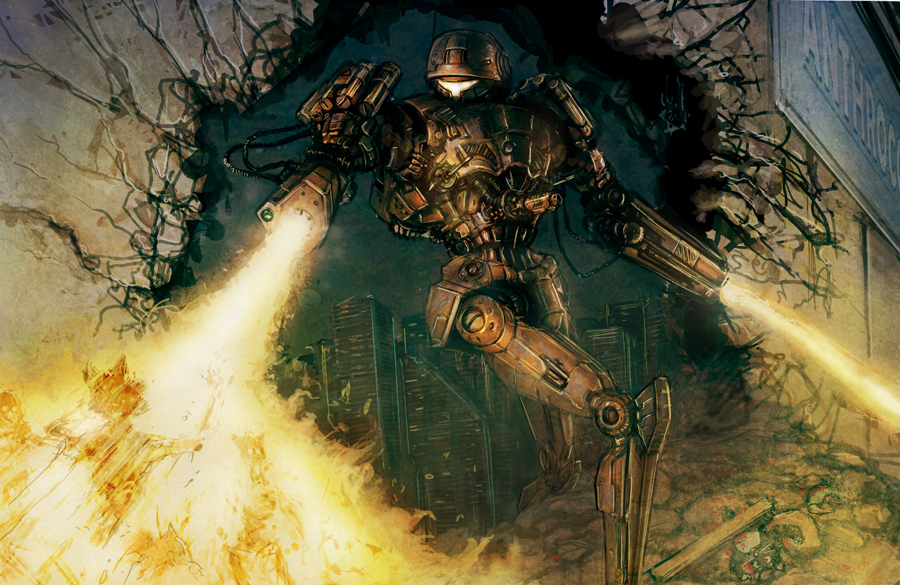
ANTI-CYBORG Crime Suppression

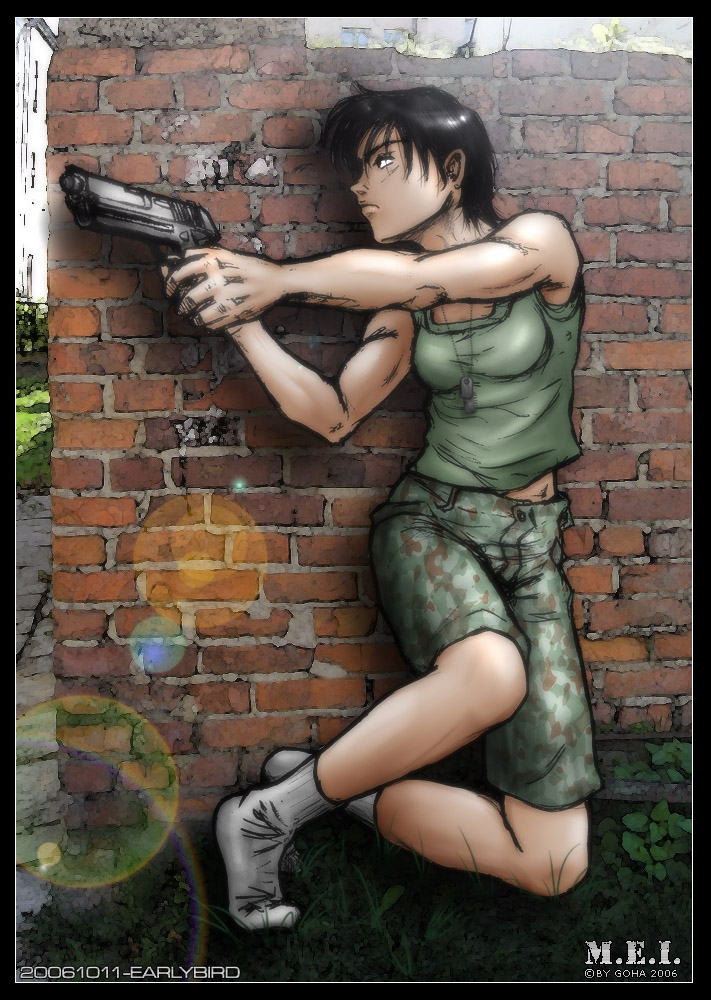
C-SWAT issue gear consists of the following:
Standard
Uniform and Armor with optional additional plates and inserts
 Helmet
and radio (with optically enhanced gas mask and oxygen supply)
Helmet
and radio (with optically enhanced gas mask and oxygen supply)
Dress Uniform
Badge (w. cookie cutter and homing beacon)
Police ID
O.I.D. BUTTOn
Gun Belt and Holster
Helmet
and radio (with optically enhanced gas mask and oxygen supply)Dress Uniform
Badge (w. cookie cutter and homing beacon)
Police ID
O.I.D. BUTTOn
Gun Belt and Holster
Choice of either an Armalite
.44 and Arasaka LEH-451, (if chosen an
officer must carry
both), or he may opt to carry either of the new Constitutional Arms
DD-MAP, or LDD-4 DUAL purpose pistols.
Extra
semi auto handgun magazines x2
Specialized Ammunition Speedloadera x4
Choice of Anti-Cyborg sidearm (Constitutional Arms REV-6, Ruger Lawgiver,
Boot Knife
Utility Knife
Plascuffs x4
ION Cuffs x2
 Stripwire
x10 w/ Dispenser
Stripwire
x10 w/ Dispenser
Street Tech Burst
Excalibur Nightstick II
Arasaka Restraint Caster
Pepper Spray
Microwaver
Evidence Kit
Notebook
Ticket Book
Specialized Ammunition Speedloadera x4
Choice of Anti-Cyborg sidearm (Constitutional Arms REV-6, Ruger Lawgiver,
Colt Borg-dropper, Norse
Tech "God" line of revolvers, etc...)
Combat
knifeBoot Knife
Utility Knife
Plascuffs x4
ION Cuffs x2
Stripwire
x10 w/ DispenserStreet Tech Burst
Excalibur Nightstick II
Arasaka Restraint Caster
Pepper Spray
Microwaver
Evidence Kit
Notebook
Ticket Book
Arasaka
PRW Shotgun
Militech Ronin
IMI MICRO-UZI 2020
Smoke, Frag, Flahbang, and Gas Grenades
Militech M-52AR
H&K M-58BAR
Sternmeyer SMG-21
Tsunami Arms Ramjet Rifle
Militech AM-3
M-40 Grenade Launcher
Militech Urban Missile Launcher
Seburo AW-726
Militech ATR-87
Stein and Wasserman Model F
Techtronica M40 Pulse Rifle
Thermite in a tube
Wutani Motion Sensor
Psuedo Dragon II RPV
Pusruit Security Inc. Webgun
Nauseator Crod Control Device
Police Issue Metal Gear
In addition NCPD certain C-SWAT units have been issued the following in limited supply for testing
Militech Ronin
IMI MICRO-UZI 2020
Smoke, Frag, Flahbang, and Gas Grenades
Militech M-52AR
H&K M-58BAR
Sternmeyer SMG-21
Tsunami Arms Ramjet Rifle
Militech AM-3
M-40 Grenade Launcher
Militech Urban Missile Launcher
Seburo AW-726
Militech ATR-87
Stein and Wasserman Model F
Techtronica M40 Pulse Rifle
Thermite in a tube
Wutani Motion Sensor
Psuedo Dragon II RPV
Pusruit Security Inc. Webgun
Nauseator Crod Control Device
Police Issue Metal Gear
In addition NCPD certain C-SWAT units have been issued the following in limited supply for testing
Gasium K-5 Ballistic Armor
ORC armor
ORC armor

ISSUED THE FOLLOWING VEHICLES:

<>CHEVROLET
TOMCAT
<>VOLKSRAD POLICE BUGGY
<>MILITECH HORSE
<>SWAT DELIVERY VEHICLE
<>Mitsubishi "MUSASHI" MINI-TANK
<>ARASAKA ATT-88
<>CONSTITUTIONAL ARMS "CONSTABLE"
<>ARASAKA "BLADERUNNER"
<>AV-6
<>Seized vehicle
<>>
<>VOLKSRAD POLICE BUGGY
<>MILITECH HORSE
<>SWAT DELIVERY VEHICLE
<>Mitsubishi "MUSASHI" MINI-TANK
<>ARASAKA ATT-88
<>CONSTITUTIONAL ARMS "CONSTABLE"
<>ARASAKA "BLADERUNNER"
<>AV-6
<>Seized vehicle










(Written by Deric Bernier, images from AD Police, Appleseed, Deric Bernier, Glitchwork, the Cyberpunk CCG, Death Elm, Sundragon, Masamune Shirow, and unknown artists.)