WILDLIFE
The wildlife found in Central and
South America is immensely diverse. The Amazon jungle alone
is home to millions of different species of the most beautiful,
exotic, and dangerous animals to walk the earth. The
Galápagos Islands off the coast of Ecuador is home to entire
species found nowhere else on earth, and was the birthplace for
Darwin's Origin Of The Species. Listing all the animals of
South America would be impossible, and new species are still
discovered regularly, instead we will list the animals that pose a
danger, or are otherwise interesting.
Reptiles And Amphibians

 Alligators, crocodiles, and caymans can
be found all over Central and South America, including the islands
of the Caribbean. Anacondas, the worlds largest snake, is found
from Colombia to the northern areas of Argentina, various species
of Boa and Python are native across the entire region, as well as
the islands. While small children have been reported to be
attacked as well as pets and even livestock, only the very largest
anacondas pose a threat to a full grown man. Of much greater
danger to humans is the Lancehead and the Bushmaster.
Varieties of both snake can be found throughout the entire region
including the carribean islands. The Lancehead, also known
as the Fer De Lance, is responsible for more snake related dea
Alligators, crocodiles, and caymans can
be found all over Central and South America, including the islands
of the Caribbean. Anacondas, the worlds largest snake, is found
from Colombia to the northern areas of Argentina, various species
of Boa and Python are native across the entire region, as well as
the islands. While small children have been reported to be
attacked as well as pets and even livestock, only the very largest
anacondas pose a threat to a full grown man. Of much greater
danger to humans is the Lancehead and the Bushmaster.
Varieties of both snake can be found throughout the entire region
including the carribean islands. The Lancehead, also known
as the Fer De Lance, is responsible for more snake related dea ths in the Americas than any other group
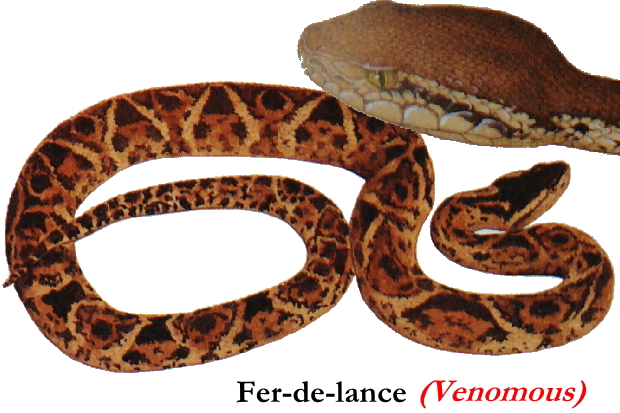 of venomous snakes. The
Bushmaster is every bit as prevalent, and much more aggressive,
having the distinction of not only being the longest venomous
snake in the Americas, but the longest viper in the world.
The Coral snake, found from Mexico to Brazil is a non-aggressive
though highly venomous. Tropical Rattlesnakes are found in
every country in the region save for Ecuador and Chile, while
Mexico and Central America are home to several species of
Rattler. Also worth mentioning as venomous species are the
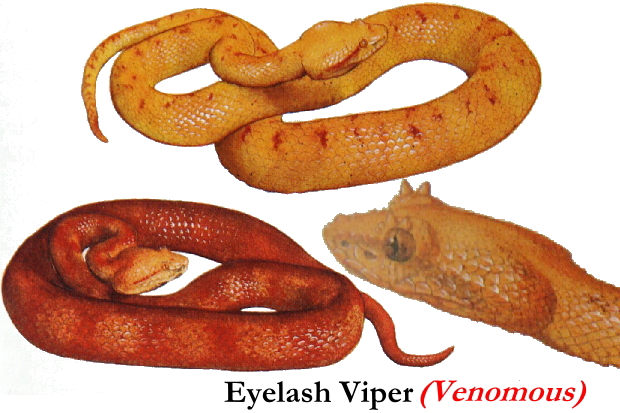
Jumping Viper and Eyelash Pit Viper.
of venomous snakes. The
Bushmaster is every bit as prevalent, and much more aggressive,
having the distinction of not only being the longest venomous
snake in the Americas, but the longest viper in the world.
The Coral snake, found from Mexico to Brazil is a non-aggressive
though highly venomous. Tropical Rattlesnakes are found in
every country in the region save for Ecuador and Chile, while
Mexico and Central America are home to several species of
Rattler. Also worth mentioning as venomous species are the
Jumping Viper and Eyelash Pit Viper.

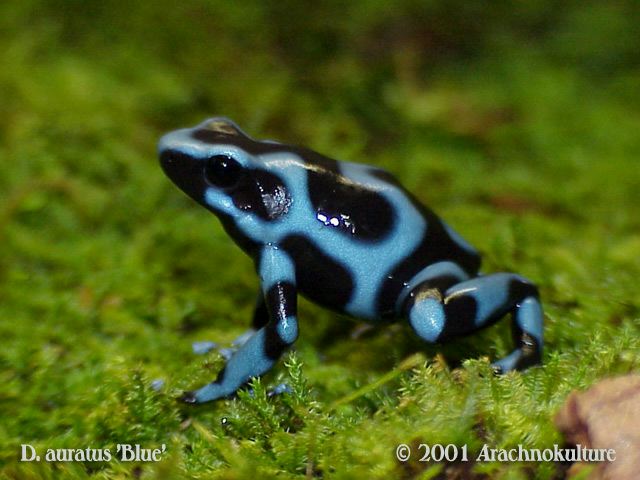 The Poison
Arrow Frog is not venomous, however it does excete an extremely
potent poison from its skin. The poison is so virulent that
natives rub arrows and blowgun darts on their back to bring down
their targets. Some frogs can have up to 200 micrograms of
poison, enough to kill 100 (or even more) adult humans. In
modern times, Cartel special forces will coat the blades of their
knives with this poison.
The Poison
Arrow Frog is not venomous, however it does excete an extremely
potent poison from its skin. The poison is so virulent that
natives rub arrows and blowgun darts on their back to bring down
their targets. Some frogs can have up to 200 micrograms of
poison, enough to kill 100 (or even more) adult humans. In
modern times, Cartel special forces will coat the blades of their
knives with this poison.
Canines and Felines

 Wolves are still found in remote areas of Mexico
and Coyotes are abundant in Central America while most of South
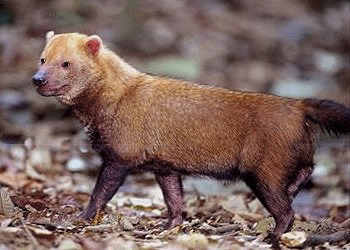
America is home to the Bush Dog. A variety of Large Cats
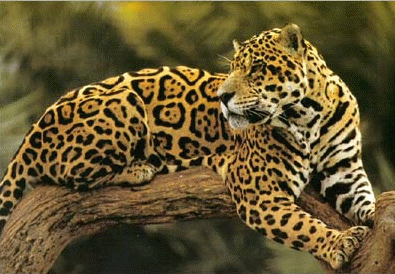
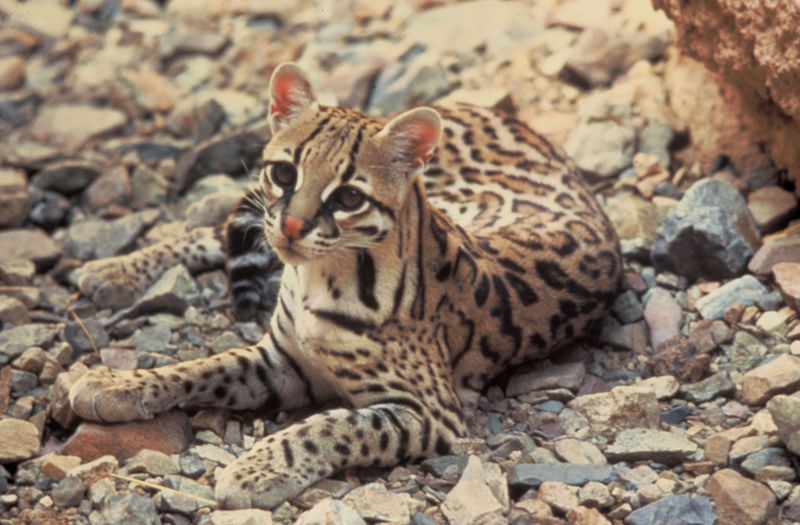
make their home in the region. Cougars, Jaguars, and the
smaller Ocelots and Margays roam Central and South America from
Mexico to Argentina, and have are even found on the island of
Trinidad. Other species have more confined territories and
are typically much smaller, like the Kodkod and Mountain Cats of
the Andes mountains, and the Geoffroys Cats of the Andes,
Pampas and Gran Chaco landscapes. Of all these animals, only
Cougars and Jaguars pose any danger to man.
Wolves are still found in remote areas of Mexico
and Coyotes are abundant in Central America while most of South
America is home to the Bush Dog. A variety of Large Cats
make their home in the region. Cougars, Jaguars, and the
smaller Ocelots and Margays roam Central and South America from
Mexico to Argentina, and have are even found on the island of
Trinidad. Other species have more confined territories and
are typically much smaller, like the Kodkod and Mountain Cats of
the Andes mountains, and the Geoffroys Cats of the Andes,
Pampas and Gran Chaco landscapes. Of all these animals, only
Cougars and Jaguars pose any danger to man.
Fish and Aquatic Life

 The most dangerous freshwater fish in
the world, the Piranha, is found exlusively in amazonian
waters. Of lesser danger is the venomous Toadfish.
Unconfirmed reports of giant catfish up to 6 feet long attacking
humans, especially children, persist. More feared even than
the Piranha, a school of which can pick a full grown cow clean to
the bone in minutes, is the Candiru. The candiru is a spiny
little parasitic fish that has been known to enter the orifices of
humans, particularly the urine tract. They follow the flow
of warm water from a urinating human bather or swimmer, and lodge
themselves in the penis. Skinny dipping in the amazonian
rivers, and especially urinating while swimming in them is
strongly warned against.
The most dangerous freshwater fish in
the world, the Piranha, is found exlusively in amazonian
waters. Of lesser danger is the venomous Toadfish.
Unconfirmed reports of giant catfish up to 6 feet long attacking
humans, especially children, persist. More feared even than
the Piranha, a school of which can pick a full grown cow clean to
the bone in minutes, is the Candiru. The candiru is a spiny
little parasitic fish that has been known to enter the orifices of
humans, particularly the urine tract. They follow the flow
of warm water from a urinating human bather or swimmer, and lodge
themselves in the penis. Skinny dipping in the amazonian
rivers, and especially urinating while swimming in them is
strongly warned against.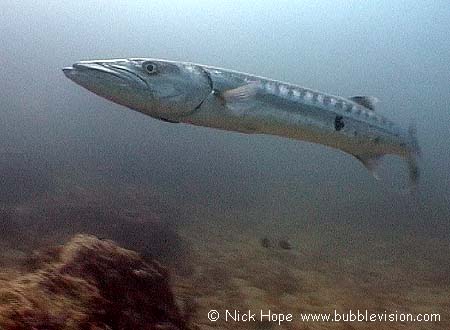 One it enters the urine
tract its extended spines act as barbs, preventing it from being
extracted. The most common remedy is a mixture of plants known to natives. There are re
One it enters the urine
tract its extended spines act as barbs, preventing it from being
extracted. The most common remedy is a mixture of plants known to natives. There are re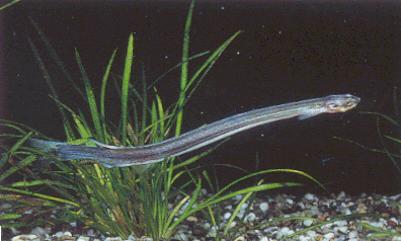 ports of SAA interrogators forcing
captives to sit submerged to the neck in barrels with Candiru
fish, the suggestion of the threat is enough to make most talk. In the oceans and gulf, the
dangers increase, as sharks, including great whites, bulls,
tigers, and hammerheads are prevalent. Stingrays,
Coneshells, Seabass, Barracudas, and jellies, including
Man-O-Wars, can make swimming a dangerous venture indeed.
ports of SAA interrogators forcing
captives to sit submerged to the neck in barrels with Candiru
fish, the suggestion of the threat is enough to make most talk. In the oceans and gulf, the
dangers increase, as sharks, including great whites, bulls,
tigers, and hammerheads are prevalent. Stingrays,
Coneshells, Seabass, Barracudas, and jellies, including
Man-O-Wars, can make swimming a dangerous venture indeed.
Insects and Arachnids

 Mosquitos transmitting Malaria and other diseases
are by far the most dangerous insect in the world, leeches, ticks,
also spread disease, and the Kissing Bug is known to spread the
potentially fatal Chagas Disease. Of more immediate threat
to humans are the numerous species of venomous Spiders, Scorpions,
Wasps, and bees. The most dangerous of which is the Banana,
or Wandering Spider, found throughout Central And South America,
it is a highly aggressive spider with venom potent enough to be
fatal in humans, the bite is also reported as the most painful
spider bite in the world due to the high levels of
serotonin. While not dangerously venomous, the Tarantula is
a symbol of fear throughout the world, and its bite does transmit
potentially dangerous bacteria. Also of interest is the
Goliath Birdeating Spider, the largest spider in the world.
Mosquitos transmitting Malaria and other diseases
are by far the most dangerous insect in the world, leeches, ticks,
also spread disease, and the Kissing Bug is known to spread the
potentially fatal Chagas Disease. Of more immediate threat
to humans are the numerous species of venomous Spiders, Scorpions,
Wasps, and bees. The most dangerous of which is the Banana,
or Wandering Spider, found throughout Central And South America,
it is a highly aggressive spider with venom potent enough to be
fatal in humans, the bite is also reported as the most painful
spider bite in the world due to the high levels of
serotonin. While not dangerously venomous, the Tarantula is
a symbol of fear throughout the world, and its bite does transmit
potentially dangerous bacteria. Also of interest is the
Goliath Birdeating Spider, the largest spider in the world.

 Finally, the tiny ant is an extremely destructive
and potentially fatal force. Huge Bullet ants have an
excruciating sting, possibly the most painful on the planet, ahead
of even wasps and bees. Of much more concern however are
Army and Driver ants, who have been known to swarm over and kill
humans. Army ants occasionally go on the move, devouring
everything in their path for miles. In rare instances entire
colonies of hundreds of millions set out on extended raids
stripping the lands bare in their path. Any animal luckless
enough to be caught in a foraging swarm will be killed and
devoured, in the space of hours they will reduced to nothing but
polished bone. Sleeping or disabled humans have been killed in
such a manner, and even if escape is managed, the bites will
themselves be hideous, often leaving permanent scars.
Allergic reactions are also possible, and may prove as fatal as
that of bee sting allergies.
Finally, the tiny ant is an extremely destructive
and potentially fatal force. Huge Bullet ants have an
excruciating sting, possibly the most painful on the planet, ahead
of even wasps and bees. Of much more concern however are
Army and Driver ants, who have been known to swarm over and kill
humans. Army ants occasionally go on the move, devouring
everything in their path for miles. In rare instances entire
colonies of hundreds of millions set out on extended raids
stripping the lands bare in their path. Any animal luckless
enough to be caught in a foraging swarm will be killed and
devoured, in the space of hours they will reduced to nothing but
polished bone. Sleeping or disabled humans have been killed in
such a manner, and even if escape is managed, the bites will
themselves be hideous, often leaving permanent scars.
Allergic reactions are also possible, and may prove as fatal as
that of bee sting allergies.
Other Animals
Interesting not because of any
danger or threat to life, other animals are of note due to their
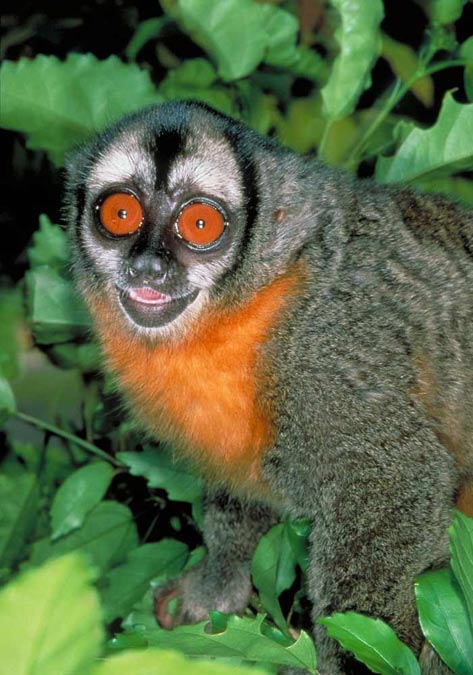
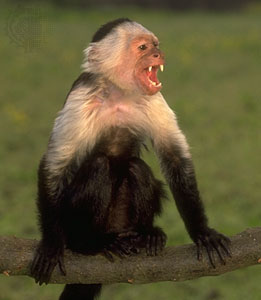
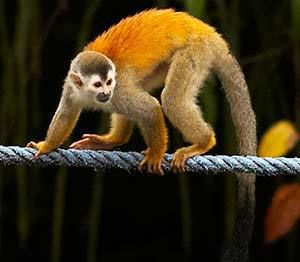
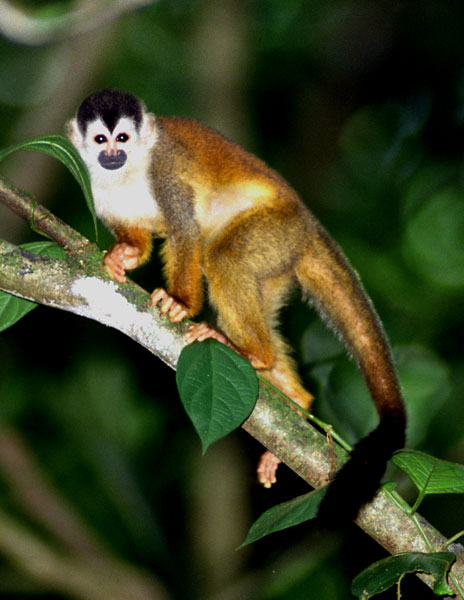
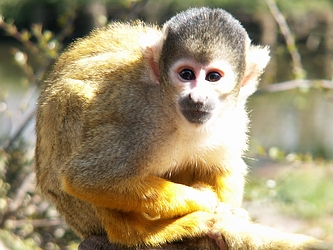
rarity or beauty. Several species of Primate thrive in
Central and South America, including Tammarin, Owl, Howler,
Capuchin, Titi, Squirrel and Spider monkeys. Some are prized
by natives for their meats, other are prized by foreign interests
for their intelligence and ease of training, Capuchins and Spider
monkeys for instance are often used as Helper monkeys or just kept
as pets.
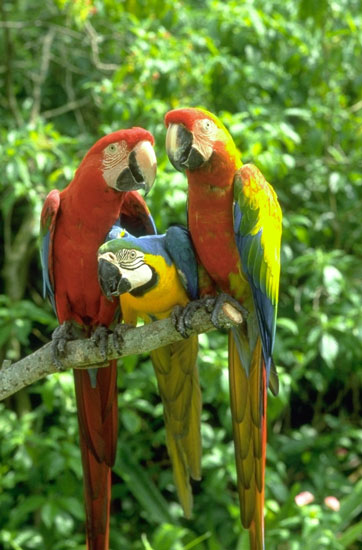
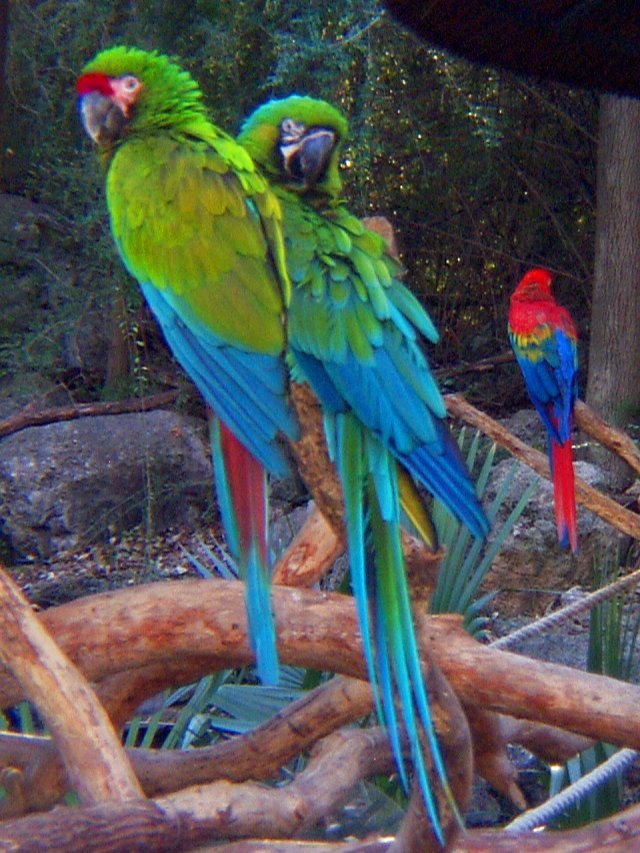
The many species of Parrot and
Macaw, as well as other tropical fowl, are highly sought after and
trappers and smugglers will earn a very comfortable living off the
birds, which will be sold overseas for between 1 and 20 thousand
dollars.
Written
by
Deric Bernier