The
following is a
list of Russian Special Forces
serving
in africa.
The
following is a
list of Russian Special Forces
serving
in africa.
 VDV
(Vozdushno-Diesantnye Voiska) – while they might be described
simply as „Airborne”, this does not represent the pride and eliteness
of these troops. “Diesant” can be described as “landing troops”, those
who jump in into a middle of action – there are naval diesant (marine
and the like), the infantry deployed from armored carriers is referred
to as diesant (like their predecessors in the WW II, riding piggy-back
on Soviet tanks), and of course there’s airborne diesant. So, the
translation closer to the soul would be “shocktroops”. VDV are chosen,
trained and equipped to serve to these expectations – they train hard,
party hard, and fight hard. They also formed the core of many Soviet
military intervention forces – Airborne were to spearhead the attack.
VDV
(Vozdushno-Diesantnye Voiska) – while they might be described
simply as „Airborne”, this does not represent the pride and eliteness
of these troops. “Diesant” can be described as “landing troops”, those
who jump in into a middle of action – there are naval diesant (marine
and the like), the infantry deployed from armored carriers is referred
to as diesant (like their predecessors in the WW II, riding piggy-back
on Soviet tanks), and of course there’s airborne diesant. So, the
translation closer to the soul would be “shocktroops”. VDV are chosen,
trained and equipped to serve to these expectations – they train hard,
party hard, and fight hard. They also formed the core of many Soviet
military intervention forces – Airborne were to spearhead the attack.
VDV were – in USSR times – an army within the army. A separate combat
arm almost. Up to the point where they had heavy equipment being
designed and produced exclusively for them – e.g. BMD series of IFV –
pararel to BMP series IFV, but lighter (for air portability and
paradrop deployment). Nowadays, they’re being rebuilt back to (and
past) that strength.
If looking for an analogy, try imagining US Marine Corps’ Russian
edition – except that these guys come from the sky, not from the sea.
Alfa (Alpha)
– Departament A of the Special Operations Centre of FSB (once called
KGB, the Russian internal security and intelligence) is a
counter-terrorist unit, similar in profile to US Delta Force. They
specialize in hostage rescue, but can undertake most SpecOps tasks, and
are equipped to the top world standards.
Alfa has about 700 operatives, divided into 5 operational groups.
Vympel (Pennant)
– department V of SOC, trained for operating in industrial complexes of
special importance (they’re the guys who will be used to storm a
nuclear power plant taken by terrorists, or something the like).
However, they have broad general training, and are often used hand to
hand with Alfa. This unit is smaller, with about 500 men and 4
operational groups.
Note on FSB: the Russian “(anti)terrorist law” entitles FSB to use
their troops (as well as Spetsnaz and Osnaz forces leaned from
elsewhere for that purpose) to conduct counter-terrorist operations
anywhere in the world, on the order of President.
 Spetsnaz / Osnaz – the Russian SpecForces
most people have heard about, but still there’s little known about
them. Spetsnaz (Spechyalnovo Naznachenya, literally “Special Purpose
(forces)”) are the commando arm of the GRU, Russian military
intelligence. They have fierce reputation due to their harsh training
methods, and therefore are considered to be extremely tough. They’ve
been deployed for reconnaissance, sabotage and COIN operations.
Spetsnaz / Osnaz – the Russian SpecForces
most people have heard about, but still there’s little known about
them. Spetsnaz (Spechyalnovo Naznachenya, literally “Special Purpose
(forces)”) are the commando arm of the GRU, Russian military
intelligence. They have fierce reputation due to their harsh training
methods, and therefore are considered to be extremely tough. They’ve
been deployed for reconnaissance, sabotage and COIN operations.
Spetsnaz is usually placed within the structure of VDV (naval Spetsnaz
– within naval infantry, i.e. marines), but not under their command –
they wear the same uniforms and insignia, and are hard to tell apart
(they are also likely to wear uniforms and insignia of any nearby unit,
just to blend in and remain unidentified as Spetsnaz). They shall be
considered an rough equivalent to US Green Berets or Army Rangers.
Naval Spetsnaz is trained as combat swimmers /frogmen, and do utilize
minisubs. Each Fleet of the Russian Navy has a Naval Spetsnaz brigade
assigned to it. The number of Spetsnaz units within VDV structure is
unknown, however, it is estimated that there might be as much as two
dozen independent Spetsnaz brigades.
Osnaz (“Separate Purpose”) is their equivalent, subordinate to the
Ministry of Internal Affairs.
 Note on spetsnaz:
the term is often used as a catch-all phrase, literally an equivalent
to English term “special forces” – it can mean anything from an elite
paratroop unit (or even a police SWAT-type team) to the true black ops
detachment. All that adds up to the Spetsnaz’s mystery.
Note on spetsnaz:
the term is often used as a catch-all phrase, literally an equivalent
to English term “special forces” – it can mean anything from an elite
paratroop unit (or even a police SWAT-type team) to the true black ops
detachment. All that adds up to the Spetsnaz’s mystery.
Gvardieytsi (the Guards)
– the title of Guards have been applied to many units in the history of
Russia and USSR – a few have been granted this at their creation, most
however were awarded for extraordinary bravery in combat. This high
status – a mark of the elite among the Russian army – was later kept up
with the best equipment available (or just being issued to these troops
first), best recruits that were there, and high standards of training
and discipline. There is a reputation behind this title, and soldiers
do a great deal to act up to it.
Whereas there are several armored, mechanized or air Guards units, and
that means merely that you are dealing with an elite panzer, infantry
or Air Force unit, there is also a number of Airborne Guards and
special purpose Guards units. They do carry traditions of the units
that’ve distinguished themselves in combat in the wars of the past, but
this often also means that you’re dealing with a true Spetsnaz unit. A
tiger in wolf’s skin.
Razviedniki (the Recon)
– there are many reconnaissance forces in the Russian army. Most are
just that: advance troops. However, there are also “long range
reconnaissance” companies (on a division level), or even battalions
(army-level). This can mean anything from poor man’s spetsnaz, to true
Military Intelligence’s Spetsnaz attached to the unit. Moreover,
“razviediniki” is one of the army’s terms to describe “the guys whose
true name is unknown and better do not speak about them too much”
(other known terms are “raidovniki” – raiders, and “okhotniki”- (game)
hunters).
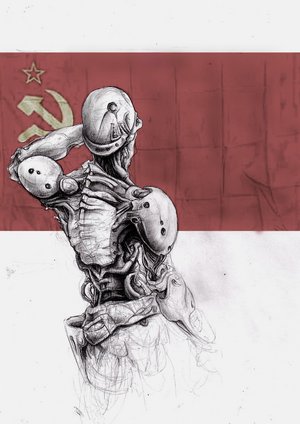
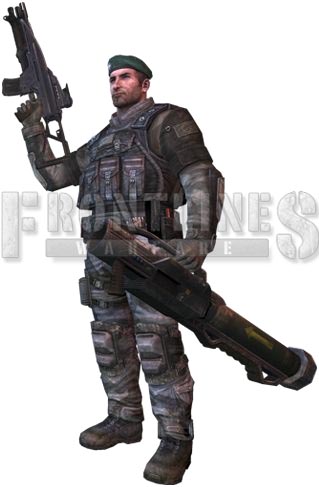
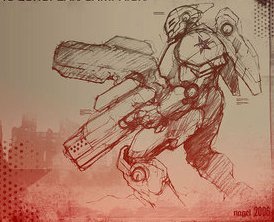
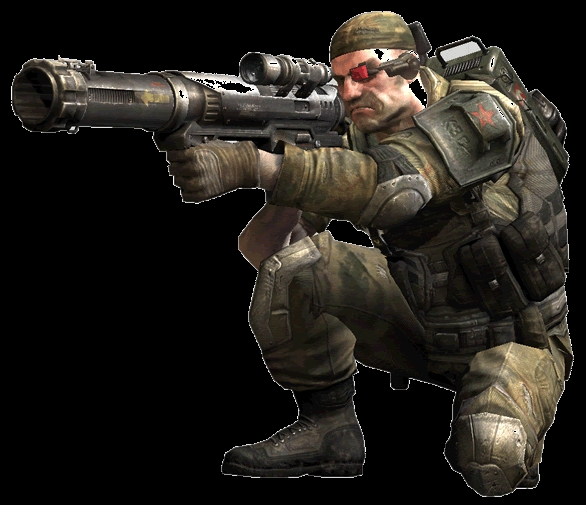
(Written by Mike Van Atta, images from Frontlines: Fuel Of War, Gears of War, and unkown artists..)