| POPULATION: |
|
 |
| LITERACY RATE: |
|
|
| SELF DEFENSE FORCES: |
|
|
| LANGUAGES: |
|
|
| ETHNIC GROUPS: |
|
|
| BORDERING COUNTRIES: |
|
| POPULATION: |
|
|
| LITERACY RATE: |
|
|
| SELF DEFENSE FORCES: |
|
|
| LANGUAGES: |
|
|
| ETHNIC GROUPS: |
|
|
| BORDERING COUNTRIES: |
|
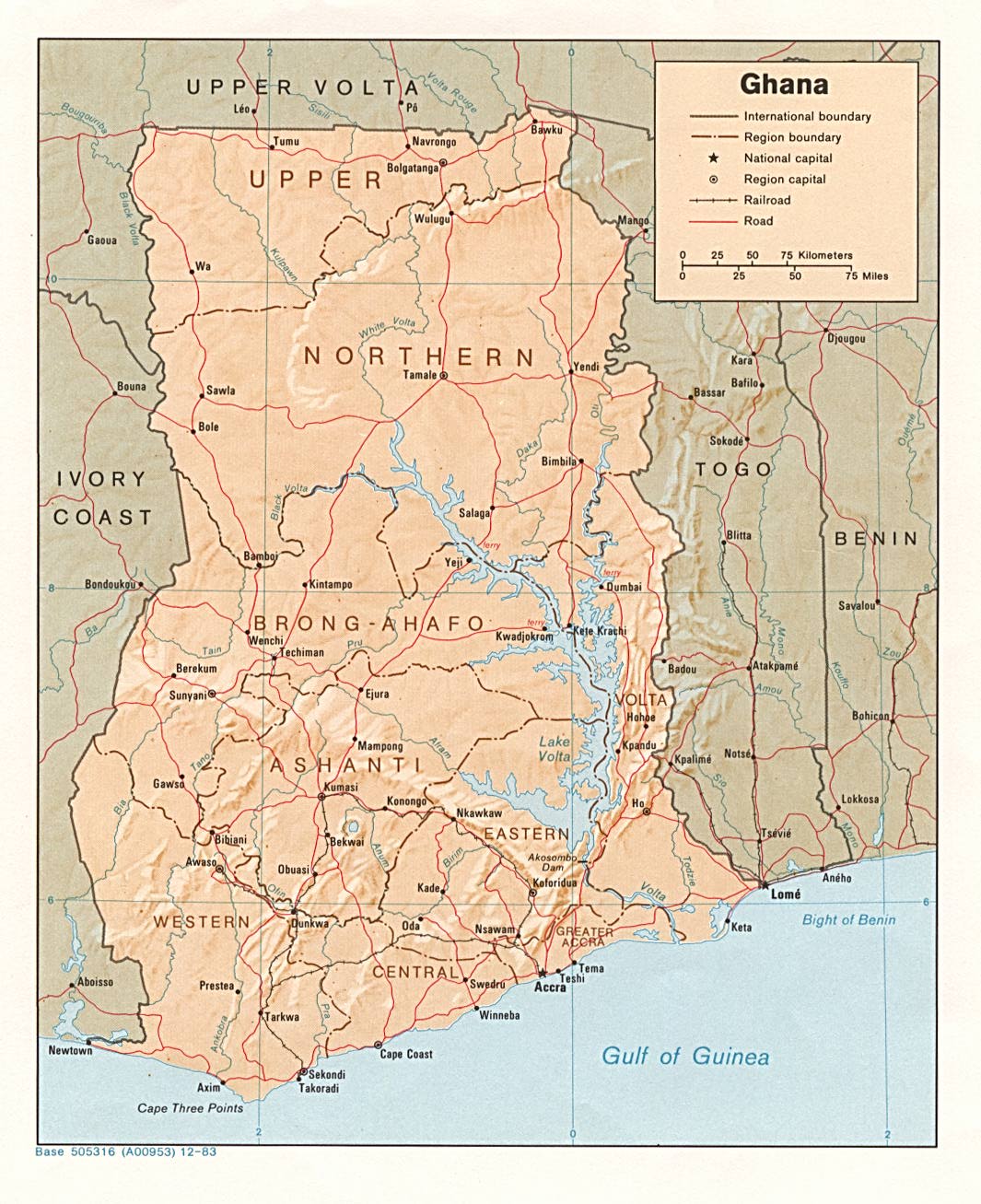 most freindly places on the continent to find yourself. Years of
exemplary government leadership in Ghana led to vast political and educational
reforms, as well as strong ties with neighboring Nigeria have left Ghana
with one of the best political systems, and the highest literacy rate in
all of Africa. Its economy is booming, and its infrastructure is
more than stable. Modern roads criss cross the country, free from
decay and land mines that plague so much of the continent. Its sparkling
beaches, lively night life, and friendly people make Ghana comparable to
Mexico's Cancun of the late 20th century as a favored vacation destination.
The country is completely self sufficient, and relies on trade only for
better relations with its neighbors and the outside world. The country
offers a great diversity in its landscapes, from rolling coastal lands,
palm-treed beaches, thick forests, grasslands and savannas, and lush hills
and waterfalls
most freindly places on the continent to find yourself. Years of
exemplary government leadership in Ghana led to vast political and educational
reforms, as well as strong ties with neighboring Nigeria have left Ghana
with one of the best political systems, and the highest literacy rate in
all of Africa. Its economy is booming, and its infrastructure is
more than stable. Modern roads criss cross the country, free from
decay and land mines that plague so much of the continent. Its sparkling
beaches, lively night life, and friendly people make Ghana comparable to
Mexico's Cancun of the late 20th century as a favored vacation destination.
The country is completely self sufficient, and relies on trade only for
better relations with its neighbors and the outside world. The country
offers a great diversity in its landscapes, from rolling coastal lands,
palm-treed beaches, thick forests, grasslands and savannas, and lush hills
and waterfalls
A darker side has risen in Ghana, that of Ruhrkohle Agriculture, a corporation that takes its cues from the Megacorps of the western world. They have been steadily growing in power and influence for the last ten years and now it is rumored that they are the real controlling power behind the government. Whispers fly that Ruhrkohle is the reason Ghana is allying itself with Nigeria in their war against Liberia, and that Ghananese military troops sent to aid are reinforced with Ruhrkohle troops. What does the corporation, or Ghana itself have to gain in the matter remains to be seen. Some claim it has to do with lucrative shipping rights, others say it revolves around trade disputes. However the most popular opinion says that if Ghana comes out ahead then it will be the most stable country available to supply the more landlocked countries with foreign trade goods and supplies, and in prime position to exploit its new power over its neighbors. Its would work the other way around as well, if Nigeria falls then the oil rich countries in the interior will have to move there oil out through Ghana, all for a hefty price.
Ghana
was hit hard by the wasting plague, but they were better prepared for it
than their nieghbors, and so their losses were not as great. Nor
do they seem to have the tribal troubles that plague so much of the rest
of the continent.
(Written by Deric "D" Bernier, with suggestions from Karsten Voigt. Ruhrkohle AG was created by Karsten Voigt.)