| POPULATION: |
|
 |
| LITERACY RATE: |
|
|
| SELF DEFENSE FORCES: |
|
|
| LANGUAGES: |
|
|
| ETHNIC GROUPS: |
|
|
| BORDERING COUNTRIES: |
|
| POPULATION: |
|
|
| LITERACY RATE: |
|
|
| SELF DEFENSE FORCES: |
|
|
| LANGUAGES: |
|
|
| ETHNIC GROUPS: |
|
|
| BORDERING COUNTRIES: |
|
 in 2013 a newly appointed President Wananga decided the only way to save
his country was to turn to foreign aid. However istead of turning
to foreign governments for aid he instead turned to corporations.
He signed a deal with Arasaka to provide military and police power, Biotechnica
to aid in rebuilding natural resources and several other corporations,
deals are currently in the works with JAB to build a space port.
In return these corporations were given free reign to conduct there business
as they saw fit. This was a tremedous success on the surface for
Ivorians, as it created jobs, opened secure trade, and restabilized the
economy. Biotechnica also began cloning elephants, and elephant farms
have become common, both for the purposes of meat, and reopening legally
the ivory trade. Once again the Ivory coast is home to the largest
supplier of Ivory in the world.
in 2013 a newly appointed President Wananga decided the only way to save
his country was to turn to foreign aid. However istead of turning
to foreign governments for aid he instead turned to corporations.
He signed a deal with Arasaka to provide military and police power, Biotechnica
to aid in rebuilding natural resources and several other corporations,
deals are currently in the works with JAB to build a space port.
In return these corporations were given free reign to conduct there business
as they saw fit. This was a tremedous success on the surface for
Ivorians, as it created jobs, opened secure trade, and restabilized the
economy. Biotechnica also began cloning elephants, and elephant farms
have become common, both for the purposes of meat, and reopening legally
the ivory trade. Once again the Ivory coast is home to the largest
supplier of Ivory in the world.
Cote
d'Ivoire has also established itself as a true neutral country, although
their actions differ from Switzerland, as they will cut off all trade and
close their borders to any country taking hostile actions towards anyone.
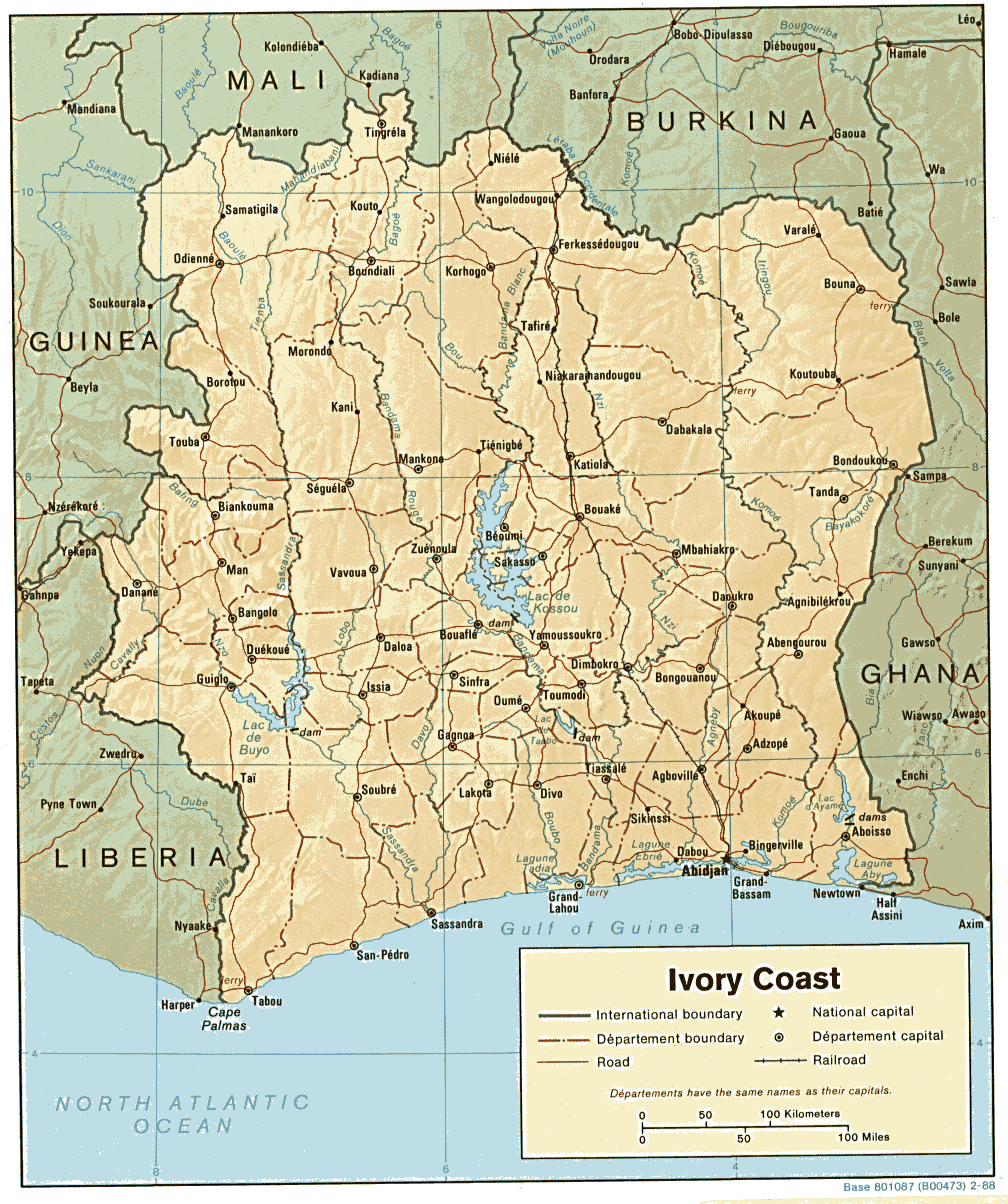
This has put them on uneasy ground with many of their neighbors, especially
with Liberia and Ghana, who are at war with each other, with Cote d'Ivoire
resting smack dab in between them. It also means their is no open
trade between Cote d'Ivoire and most of the world, including the superpowers
of the EEC, US and China. However trade with corporations, which
Ivorian leaders see as countires within themselves, are almost never deinied
trade. Cote d'Ivoire has also taken pains to keep its culture alive
and well, and no interference with remote tribes, is permitted. This
provides film makers, anthropologists, and historians great opportunities,
which the government allows, but charges a strong fee for of course.
(Written by Deric "D" Bernier)