| POPULATION: |
|
 |
| LITERACY RATE: |
|
|
| SELF DEFENSE FORCES: |
|
|
| LANGUAGES: |
|
|
| ETHNIC GROUPS: |
|
|
| BORDERING COUNTRIES: |
|
| POPULATION: |
|
|
| LITERACY RATE: |
|
|
| SELF DEFENSE FORCES: |
|
|
| LANGUAGES: |
|
|
| ETHNIC GROUPS: |
|
|
| BORDERING COUNTRIES: |
|
 trying to establish a working system gave rise to conflict as many of the
major tribes in the country, each bcked by their own militia began openly
fighting for control. The one common thread of those vying for control
were the establishment of a Marxist-Leninist state, with Strong ties to
the former Soviet Union. However as soon as one party would get elected
it seemed they would be assissinated, or some violent act would cause the
collapse of the party. The most famous of these events was the 1993
kidnapping of two government officials, and the slaughter in 1994 of an
entire school were several of the cabinet members children attended.
Ot was the latter event, coupled with the withdrawal of Soviet support
due to the fall 4 years ealier that prompted Congo to petition the UN for
help. While the UN for the most part stayed out of it, in 1999 the
US agreed to step in and help get the country under control.
50.000 US troops were sent to Africa and immediately began a policing action,
this led to bloody conflict but after 6 years of fighting the US forces
finally managed a defeat over the various warring tribes. Most of
the more powerful tribes fled into the Democratic Republic of Congo, taking
their dwindling supply of Soviet supplied weapons with them, as well as
newly captured US weapons.
trying to establish a working system gave rise to conflict as many of the
major tribes in the country, each bcked by their own militia began openly
fighting for control. The one common thread of those vying for control
were the establishment of a Marxist-Leninist state, with Strong ties to
the former Soviet Union. However as soon as one party would get elected
it seemed they would be assissinated, or some violent act would cause the
collapse of the party. The most famous of these events was the 1993
kidnapping of two government officials, and the slaughter in 1994 of an
entire school were several of the cabinet members children attended.
Ot was the latter event, coupled with the withdrawal of Soviet support
due to the fall 4 years ealier that prompted Congo to petition the UN for
help. While the UN for the most part stayed out of it, in 1999 the
US agreed to step in and help get the country under control.
50.000 US troops were sent to Africa and immediately began a policing action,
this led to bloody conflict but after 6 years of fighting the US forces
finally managed a defeat over the various warring tribes. Most of
the more powerful tribes fled into the Democratic Republic of Congo, taking
their dwindling supply of Soviet supplied weapons with them, as well as
newly captured US weapons.
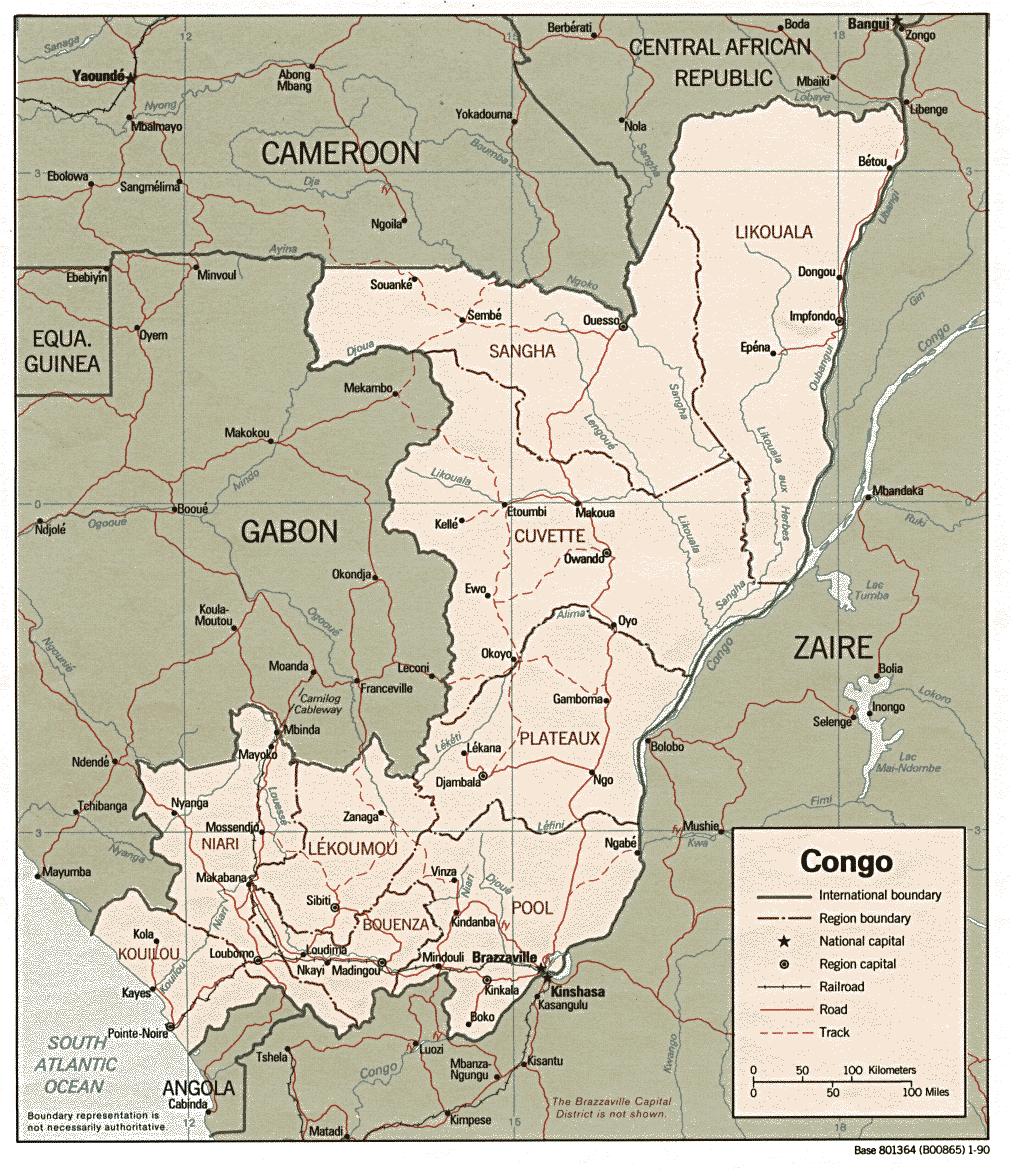
Now the Congo knows relative peace, yet relies solely on the US for military protection, and is very reliant on the US trade to feed its people. The US has built several military bases in the country and these avt as the primary launch bases for the conflict in the Democratic Republic of Congo (formerly Zaire). There are still minor tribal skirmishes, yet while bloody these have little effect on the political front of Congo, and mostly take place in the jungles and marshlands,
The
Congo today is primarily composed of dense tropical forests, narrow plains
and vast marshlands along the Atlantic coast, and high mountains and plateus.
There are very few large es in Congo, where about half the population
dwell, the rest of the population is spread out over the country, with
most living in small towns or reverting to tribal life in small villages
in the jungles, mountains and marshlands. The Congo also holds many
lost tribes who have had little or no contact with the modern world, this
includes cannibals and headhunters, as well as the traditional warrior
and hunter and gatherer tribes.
(Written by Deric "D" Bernier)